(217) 223-4313 | Contact Us
facebook twitter linkedin
GREDF
  • Regional Advantage
    • Living Here
    • Local Success and Investment
    • Infrastructure and Accessibility
    • Workforce
    • Process
    • Adams County CAREs
  • Site Selectors
    • Properties
    • Development Guide
    • Incentive Overview
    • Major Employers
  • Workforce Solutions
    • Adams County Works Teams
    • Monthly Seminars
    • Work Ready Toolbox
    • Workforce Events
      • Career Launch Signing Day
      • MakerFest
      • Career Spark
  • Newcomer Concierge
    • Living Here
    • Newcomer Concierge
  • Business Resources
    • Business Concierge Program
    • Incentive Overview
    • ScaleUp And Secure
    • Company Visits
    • Small Business and Entrepreneurs
      • Resources
      • Community
    • Black Owned Businesses
    • Quincy Strategic Plan
    • Studies and Reports
      • GROW Program
      • Quincy Riverfront Splash Pad
      • Regional Sports Complex
  • About
    • Annual Meeting Presentation
    • GREDF Strategic Plan
    • The Team
    • Partners
    • Contact Us
Right on Q
GREDF

Archive

Working Together to Address Rivers Issues

Working Together to Address Rivers Issues July 3, 2013

[share]

Rivers Issues are Driving New Partnerships
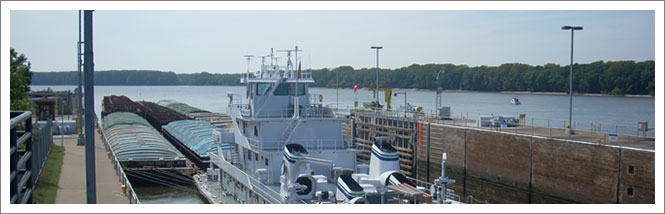
QuincyLockandDam21Nov2008Over the past several weeks GREDF President, Marcel Wagner and Director of the Quincy Entrepreneurship Center, Charles Bell, have had the opportunity to meet with a number of groups that have the same concerns about the future of river transportation as our organization. Meetings with Department of Transportation officials from Illinois, Iowa and Missouri, agricultural trade groups such as the Illinois Soybean Association and Iowa Soybean Association and a variety of economic development groups have driven the need for the 3 states and others to partner on a focused effort to maintain and upgrade the locks and dams. Just one reason why: At a recent meeting in Iowa the Army Corp of Engineers said that their schedule of upgrades and maintenance is now pushed out to 2090.

Here are some important statistics about the current state of river issues:

  • Of the 27 locks and dams on the upper Mississippi, only 1 is within its 50 year design life, 2 are 20 years past design life, 21 are 30 years past design life and 3 are past the 30 year design life.
  • The average age of the upper Mississippi locks is 72 years.
  • A single point of failure at any lock shuts down the system.
  • Current funding only addresses critical maintenance and emergency repairs. Since 1990 that funding has been cut from $13 billion annually to $7 billion annually.
  • Trade growth on the Mississippi will increase by 40% over the next 20 years.
  • 1 barge is the equivalent of 70 53-foot semi-trucks and a disruption of river service would cause severe deterioration of roads and bridges and increase road congestion by multiples.
  • Barge freight averages $10.67 per ton cost of freight less than road and rail.

A partnership among the Upper Mississippi River states is urging the passage of the 2013 Water Resources and Development Act which is critical to maintaining the current status of our waterways. Congress also needs to address the shortage of funding in the Inland Waterways Trust Fund.

The next step for the partnership is to secure Marine Highway status for the Upper Mississippi Connector, stretching from St. Louis to St. Paul on the Mississippi River. Declaring this Connector a Marine Highway could benefit the region by promoting navigation and economic development. The designation also allows ports and terminals to receive technical assistance from the U.S. Maritime Administration, a part of the U.S. Department of Transportation.

What can you do?

Contact your state and federal elected officials and ask them to make rivers issues a top priority. You can find contact information for your elected officials here: www.usa.gov.
Business Survey

Business Survey June 19, 2013
Survey header
A collaboration of GREDF, the City of Quincy and Adams County

[share]
Economic development is not an endeavor of a single person or even a single organization. Successful economic development is a collaborative and aggressive process. That’s why GREDF, in partnership with the City of Quincy and Adams County, has developed a business survey to help gauge the current business environment in our region.

By filling out our short, 13-question survey, you are providing feedback we will use to improve the economic vitality of our region, resulting in an environment that benefits our communities as well as the businesses that call our communities home.

Take the Survey


Thank you for filling out our survey. We value your feedback. For more information about how GREDF can assist with your business, please contact us at 217.223.4313 or gredf@gredf.org.


Marcel W. Wagner, Jr., CEcD
President, Great River Economic Development Foundation

Kyle Moore
Mayor, City of Quincy

Les Post
Chairman, Adams County Board

Calling All Entrepreneurs

Calling All Entrepreneurs May 20, 2013

[share]

So you want to start a business…

gredf-entreprenuership-center-growing-businesses-in-adams-county-il

Have you ever thought about starting your own business?

Do you have a skill or hobby that you would like to market?

Two Rivers Regional Council of Public Officials which serves Adams, Brown, Pike and Schuyler Counties, is trying to find individuals in the communities it serves who may be interested in starting their own business.

If you or someone you know has thought about starting a business, the Comprehensive Economic Development Strategy (CEDS) Committee would like to hear from you! Please consider filling out this very short survey regarding your entrepreneurial interests. The information you provide will help the CEDS Committee develop a program that will support entrepreneurs and future business owners.

CLICK HERE to take the survey!

Two Rivers Economic Development District is a group of local business and community leaders dedicated to improving the regional economic climate in their communities. For more information, visit http://www.trrcopo.org/.


Quincy Entrepreneurship Center

Ready… Set… Grow.

Get the answers you need to start a business or grow an existing one from experts in business development and entrepreneurship. We help you cut through the tangle of resources and make the right connections to achieve your goals.

Our services are free and confidential and include:

  • One-on-one business counseling
  • Business plan assistance
  • Financial analysis and planning assistance
  • Location assistance
  • Business education and training opportunities
  • Investor, industry contacts and service provider introductions
  • Grant and loan information
  • International trade assistance
  • Management training
  • Market analysis
  • Mentor matchmaking
  • Networking
  • Illinois Entrepreneurship Network partner referrals

Visit our Quincy Entrepreneurship Center page for more information.

Building a Better Workforce

Building a Better Workforce May 1, 2013

Summit Brings Leaders Together to Develop a Vision for Long-Term Change

[share]Last week more than 40 leaders came together to discuss workforce development issues in Adams County and to develop a shared vision for long-term change. The event facilitator assisted the group with identifying and prioritizing the area’s workforce challenges and building a framework for future collaboration.

Participants included representatives from secondary and post-secondary education, regional and local development groups, staffing services and a number of community-based agencies that all have some involvement in workforce development.

WIB logo

JWCC logo2010 GREDF Logo

United Way Logo

The United Way of Adams County, the Workforce Investment Board of Western Illinois, John Wood Community College and GREDF hosted the event because we recognize the importance of maintaining a skilled and reliable workforce in our area.

“The availability of skilled labor has become a key factor in site selection and expansion decisions,” noted GREDF President Marcel Wagner. “Our ability to retain and attract businesses directly impacts the well-being of our region and the ability of our families to be financially self-sufficient.”

You may recall our last eDevelopments included findings from a recent survey conducted by Area Development Magazine detailing top site selection factors. Labor costs and availability of skilled labor ranked number one and number three respectively.

A steering committee is being assembled to build strategies and address the challenges and goals identified by the group. If you or your organization is interested in being a part of this steering committee, please contact Megan Backs at 217.223.4313 or meganb@gredf.org.

Communicating Our Strengths

Communicating Our Strengths April 17, 2013
Site Selection Priorities and Our Messaging

[share]For the past 27 years, a leading site and facility planning publication, Area Development, has surveyed corporate decision makers regarding their location and expansion plans. Although not the final word in new facility development, the survey results provide excellent insights into key factors that influence site selection decisions.

Let’s take a look at the Top 26 Site Selection Factors Rankings of 2012:
  1. Labor costs
  2. Highway accessibility
  3. Availability of skilled labor
  4. Availability of advanced ICT (Information and Communication Technology) services
  5. Occupancy or construction costs

    Workforce, Highways, River Adams County Illinois Collage
    We must capitalize on and communicate our strengths including highway accessibility, available land, proximity to technical college/training and waterway accessibility, among others.
  6. Energy availability and costs
  7. Corporate tax rate
  8. Available buildings
  9. Tax exemptions
  10. Low union profile
  11. Right-to-work state
  12. Proximity to major markets
  13. State and local incentives
  14. Environmental regulations
  15. Expedited or “fast-track” permitting
  16. Inbound/outbound shipping costs
  17. Availability of long-term financing
  18. Available land
  19. Proximity to suppliers
  20. Training programs
  21. Accessibility to major airport
  22. Proximity to technical college/training
  23. Raw materials availability
  24. Railroad services
  25. Availability of unskilled labor
  26. Waterway or ocean port accessibility
So what do these rankings mean for our region?

These factors are important in developing the message that GREDF will use to aggressively market the Quincy and Adams County region for new investment. We must capitalize on and communicate our strengths including highway accessibility, available land, proximity to technical college/training and waterway accessibility, among others. According to the survey results, most companies are not planning significant movement to new plant and other facility locations until the later part of 2014/early 2015. This gives GREDF and our region time to research, craft and broadcast our message.

What about our existing businesses?

It is important to recognize that these site selection factors are also key as we continue to grow our business retention and expansion program. Most new investment will come in the form of growth by existing businesses. The companies in Quincy and Adams County are likely facing the same challenges as those corporations surveyed – including uneven growth and a lackluster national economic recovery. GREDF staff needs to be able to provide the support, linkages and potential resources to our existing companies so when they are ready to grow, they decide to stay in our community. SitesandBuildings

Growing Entrepreneurial Communities

Growing Entrepreneurial Communities April 3, 2013

[share]

We love these 10 Keys to Economic Success from Don Macke with the Center for Rural Entrepreneurship. Thanks to our friend, Jack Schultz, for bringing them to our attention in his weekly eNewsletter, The Agurban. You can sign up for Don’s Entrepreneurial Communities Newsletter here and Jack’s The Agurban Newsletter here.

Keys to Economic Success – Growing Entrepreneurial Communities

Entrepreneurship Success SignKey 1 – Local Responsibility: Economic development does not just happen. There is no invisible force that creates jobs, provides new investment or expands the tax base authority of local governments. People and organizations make economic development happen either through private or collective decisions. Pro-active communities and regions can and do change their prosperity through smart, well-worked and sustained economic development.

Key 2 – Smart Game Plan: We can no longer ride on past advantages. Today’s highly competitive global economy and society demands that American communities invest in developing smart game plans rooted in genuine development opportunities. What has worked in the past may no longer make sense.

Key 3 – Robust Investment: We all know that businesses that do not reinvest in themselves are likely to erode their competitive advantage, lose market share and eventually fail. Well, the same is true for communities. As every farmer knows, you cannot reap what you do not plant. The same is true with economic development; there must be robust investment in a smart development game plan sustained annually over time.

Key 4 – Entrepreneurial Development Systems: We have studied economic development across North America. One lesson we have learned is that systems generate greater outcomes when compared to unarticulated programmatic efforts. In economic development with the shift in focus back to local entrepreneurs, the prime opportunity for development is through entrepreneurial development systems. Building entrepreneurial development systems is hard, but the potential dividends are huge.

Key 5 – Sustained Effort: Economic development never ends. There are no holidays, vacation or retirement. Communities that succeed sustain their efforts at a robust level year in and year out over decades. The key to sustained effort is renewal of community leadership. Building a game plan that invests in economic development leadership and ensures continued transition is the foundation for sustained effort.

Key 6 – Growth Entrepreneurs: Each community must find its own solution set. Every community is different and has unique opportunities for development. We believe that communities that succeed in the 21st Century focus on helping to grow more growth entrepreneurs.

Key 7 – Attributes of an Entrepreneurial Community: The State of Georgia has done a remarkable job with its Georgia Entrepreneurial Communities Initiative. This program has helped communities, large and small, across Georgia explore and build programs that foster an entrepreneurial climate or environment.

Key 8 – Immigrants & New Residents: Immigrants and new residents have been a renewing force in American communities forever. Communities that welcome, embrace and support immigrants and new communities do better economically and socially over time.

Key 9 – Real Regional Collaboration: One of America’s greatest economic development challenges is the lack of workable and meaningful vehicles for regional collaboration. Successful communities will likely foster regional development collaborations through locally supported regional development organizations.

Key 10 – Civic & Social Entrepreneurs: It is important to recognize that there are three kinds of entrepreneurs that will enable development success and sustained prosperity – business, civic and social entrepreneurs. Civic (government) and social (nonprofits) will lead in creating the strategies, quality of life amenities and business climates necessary for business entrepreneurs to succeed. Conversely, business entrepreneurs drive economic development creating new private investment, jobs and careers and local tax bases.

A Message from our new President

A Message from our new President March 20, 2013

[share]

I want to take this opportunity to introduce myself to the members, partners and residents in the Quincy region as I become part of this wonderful community. I am pleased and privileged to serve as the new President of the Great River Economic Development Foundation.

Since starting last Monday I’ve had the opportunity to meet with new friends who are dedicated to the success and future growth of the region. I want to personally thank GREDF Board Chairman, Tim Finlay, the Search Committee and the GREDF Board for this opportunity. My wife Karen and I are excited about becoming a part of a great place to live and work.

During my initial time here, my focus will be on meeting with the public and private leadership and doing a lot of listening. I will strive to integrate my 20 years of experience in economic development into the fabric and future of Quincy. As a development organization, priorities will be on workforce development, retention and growth of existing business, enhancing the ability for entrepreneurs to start and build business and to take the message of the environment for business success to the national and international markets.

Economic development is not an endeavor of a single person or single organization… successful economic development is a collaborative and aggressive process. I am enthusiastic about developing and continuing relationships with community leadership to assist in the overall mission of GREDF.

GREDF has an outstanding staff and I am very excited to be on the development team. To those of you I’ve met, thank you for the warm welcome and to those of you who I’ve yet to meet, I look forward to getting to know you.

Sincerely,

Marcel W. Wagner, Jr., CEcD

P.S. My email is wagnerm@gredf.org or you can reach me at the GREDF office at 217.223.4313. Please don’t hesitate to contact me or members of the staff if we can be of service.

GREDF Welcomes New President

GREDF Welcomes New President March 11, 2013

[share]

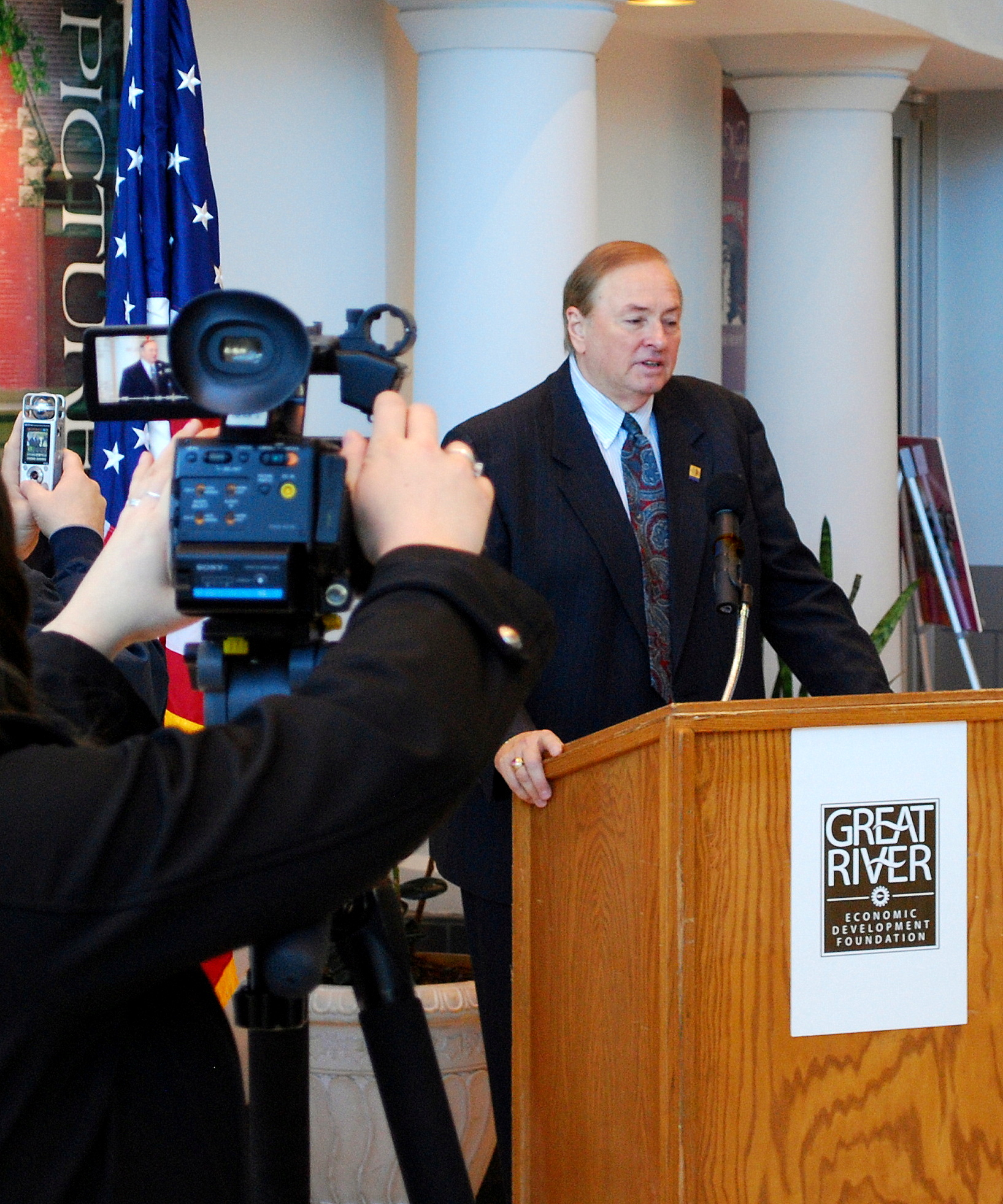
The public is invited to a press conference to meet Marcel Wagner on Wednesday, March 13, 2013, at 9:00 am in the Lobby of the Oakley-Lindsay Center.

Marcel W. Wagner, Jr, CEcD

The Board of Directors of the Great River Economic Development Foundation, announced the hiring of Marcel W. Wagner, Jr. as the new President of the organization. An eleven-member committee consisting of community leaders and GREDF board members recommended Wagner after a 6-month-long nationwide search. Wagner was unanimously approved by GREDF Board of Directors members attending a special meeting on March 5, 2013.

“Marcel’s years of experience as an economic development professional and proven track record in a region with similar characteristics to our tri-state region made him stand out among the pool of strong local and national candidates we interviewed,” said Tim Finlay, Chairman of the GREDF Board of Directors and a member of the Search Committee. “The level of interest in the position indicated to us that GREDF and our region have a reputation for being pro-economic growth,” Finlay added.

“I’m ready to hit the ground running. The presence of such a qualified staff and committed GREDF Board were very important to me as I went through the selection process” said Marcel Wagner. “My wife and I are eager to make the tri-state region our home and have already experienced what a special and welcoming community Quincy is,” Wagner added.

Mr. Wagner’s first official day with GREDF was Monday. “Thanks to the diligent work of the members of the Search Committee, we were able to meet the timeline we originally established for a spring hiring,” said Finlay.

Jim Mentesti announced his retirement after 27 years of service to GREDF and the Tri-State area in August. Phil Conover had been serving as interim President while Jim Mentesti served as a consultant during the transitional period. Conover will continue serving the organization through the end of March. Mentesti concluded his service as a consultant at the end of February.

Who is Marcel Wagner?

Marcel Wagner has spent the past 21 years with the Allen Economic Development Group in Lima, Ohio, the last 19 of those years as its President and CEO before retiring from that position in January. Wagner is a Certified Economic Developer and former Chair of the International Economic Development Council Certification and Education Committee. He was an Executive Committee Member of Team Ohio through the Ohio Economic Development Council as well as former chair of the Allen County Workforce Investment Act Board and Allen County Revolving Loan Fund.

During his tenure with the AEDG, Wagner developed and implemented a regional marketing plan and targeted industries marketing program, established a Foreign Trade Zone, oversaw the development and sale of 5 spec buildings, participated in the start up of two entrepreneurship centers and administrated a private loan fund, among other activities. He was also involved as a pilot user in the development of business retention software now widely used in the economic development world. During his time at AEDG, the organization assisted in over 105 industrial and commercial projects creating 6,300 jobs, retaining 3,500 at-risk jobs and representing $3.2 billion in new capital investment. One example of Wagner’s contributions is his involvement in the development and construction of the 1.2 million square foot Proctor and Gamble Distribution Center, one of the largest fully automated logistics center in the world.

eDevelopments: Educating Educators about Manufacturing Careers

eDevelopments: Educating Educators about Manufacturing Careers February 20, 2013

[share]

Counselors Academy Exposes Educators to Manufacturing Career Paths

Counselors Academy 2013 February at JWCC

School counselors from around the region now have a bigger toolbox thanks to a partnership among the Workforce Investment Board of Western Illinois, Quincy Area Vocational Technical Center, John Wood Community College and GREDF. The counselors spent last Thursday learning how they can help their students succeed in the area’s thriving manufacturing sector.

The message from local manufacturing representatives and workforce experts who met with the counselors during the day-long academy was clear: There are good, well-paying jobs right here in our region if our young adults are willing to show up, receive training and work hard.

The overall theme of the day was “Manufacturing in the 21st Century”. Members of an Employers Panel which included Jennifer Jenkins of Archer Daniels Midland, Vic Luburich of Fitzpatrick Brothers, Inc., Mike Dailing of Knapheide Manufacturing Company and Julie Bonansinga of Snelling Personnel Services/Industrial Workforce covered the following information:

  • Variety of manufacturing jobs available / What areas are growing?
  • Skills needed for those jobs / What do you look for when you are hiring?
  • What prospective employees should expect / What is the work environment like?

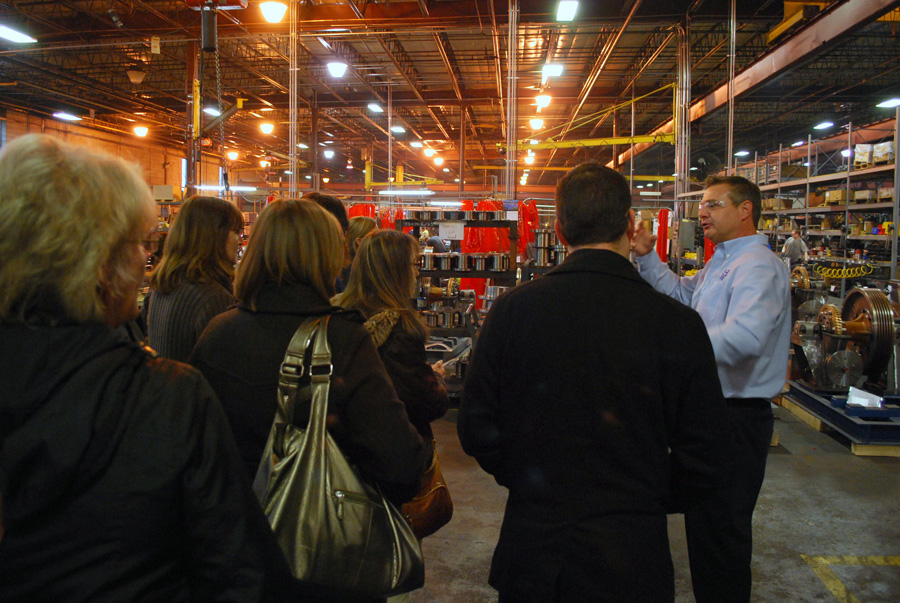
Participants also went on a driving tour of some of Quincy’s Business Parks hosted by Megan Backs of GREDF and toured the manufacturing facilities of Hollister-Whitney Elevator Corporation.

An educated and skilled workforce is the foundation of every community and future of every economy. Thanks to these partners for their commitment to educating and growing our current and future workforce.

Hollister-Whitney Counselors Academy Tour

eDevelopments: Educating Educators about Manufacturing Careers

eDevelopments: Educating Educators about Manufacturing Careers February 20, 2013

[share]

Counselors Academy Exposes Educators to Manufacturing Career Paths

Counselors Academy 2013 February at JWCC

School counselors from around the region now have a bigger toolbox thanks to a partnership among the Workforce Investment Board of Western Illinois, Quincy Area Vocational Technical Center, John Wood Community College and GREDF. The counselors spent last Thursday learning how they can help their students succeed in the area’s thriving manufacturing sector.

The message from local manufacturing representatives and workforce experts who met with the counselors during the day-long academy was clear: There are good, well-paying jobs right here in our region if our young adults are willing to show up, receive training and work hard.

The overall theme of the day was “Manufacturing in the 21st Century”. Members of an Employers Panel which included Jennifer Jenkins of Archer Daniels Midland, Vic Luburich of Fitzpatrick Brothers, Inc., Mike Dailing of Knapheide Manufacturing Company and Julie Bonansinga of Snelling Personnel Services/Industrial Workforce covered the following information:

  • Variety of manufacturing jobs available / What areas are growing?
  • Skills needed for those jobs / What do you look for when you are hiring?
  • What prospective employees should expect / What is the work environment like?

Participants also went on a driving tour of some of Quincy’s Business Parks hosted by Megan Backs of GREDF and toured the manufacturing facilities of Hollister-Whitney Elevator Corporation.

An educated and skilled workforce is the foundation of every community and future of every economy. Thanks to these partners for their commitment to educating and growing our current and future workforce.

Hollister-Whitney Counselors Academy Tour
  • Earlier
  • Later
GREDF

Links

  • About
  • Newcomer Concierge
  • Why Here
  • Site Selectors
  • Workforce Solutions

GREDF

501 Hampshire St
Quincy, IL 62301
Phone: (217) 223-4313
IL
facebook
twitter
linkedin
roq
© 2026 Great River Economic Development Foundation. All Rights Reserved.