(217) 223-4313 | Contact Us
facebook twitter linkedin
GREDF
  • Regional Advantage
    • Living Here
    • Local Success and Investment
    • Infrastructure and Accessibility
    • Workforce
    • Process
    • Adams County CAREs
  • Site Selectors
    • Properties
    • Development Guide
    • Incentive Overview
    • Major Employers
    • Studies and Reports
  • Workforce Solutions
    • Adams County Works Teams
    • Monthly Seminars
    • Work Ready Toolbox
    • Workforce Events
      • Career Launch Signing Day
      • MakerFest
      • Career Spark
  • Newcomer Concierge
    • Living Here
    • Newcomer Concierge
  • Business Resources
    • Business Concierge Program
    • Incentive Overview
    • Company Visits
    • Small Business and Entrepreneurs
      • Resources
      • Community
    • Black Owned Businesses
    • Quincy Strategic Plan
    • Studies and Reports
      • GROW Program
      • Regional Sports Complex
  • About
    • Annual Meeting Presentation
    • GREDF Strategic Plan
    • The Team
    • Partners
    • Contact Us
  • ScaleUp And Secure
Right on Q
GREDF

Archive

REGION CHARTERS COURSE TO TRAIN STUDENTS FOR ADVANCED MANUFACTURING CAREERS

REGION CHARTERS COURSE TO TRAIN STUDENTS FOR ADVANCED MANUFACTURING CAREERS November 1, 2012

[share]

Pathways to Results Process Connects Education and Business Resources; $500,000 Grant Boosts Effort

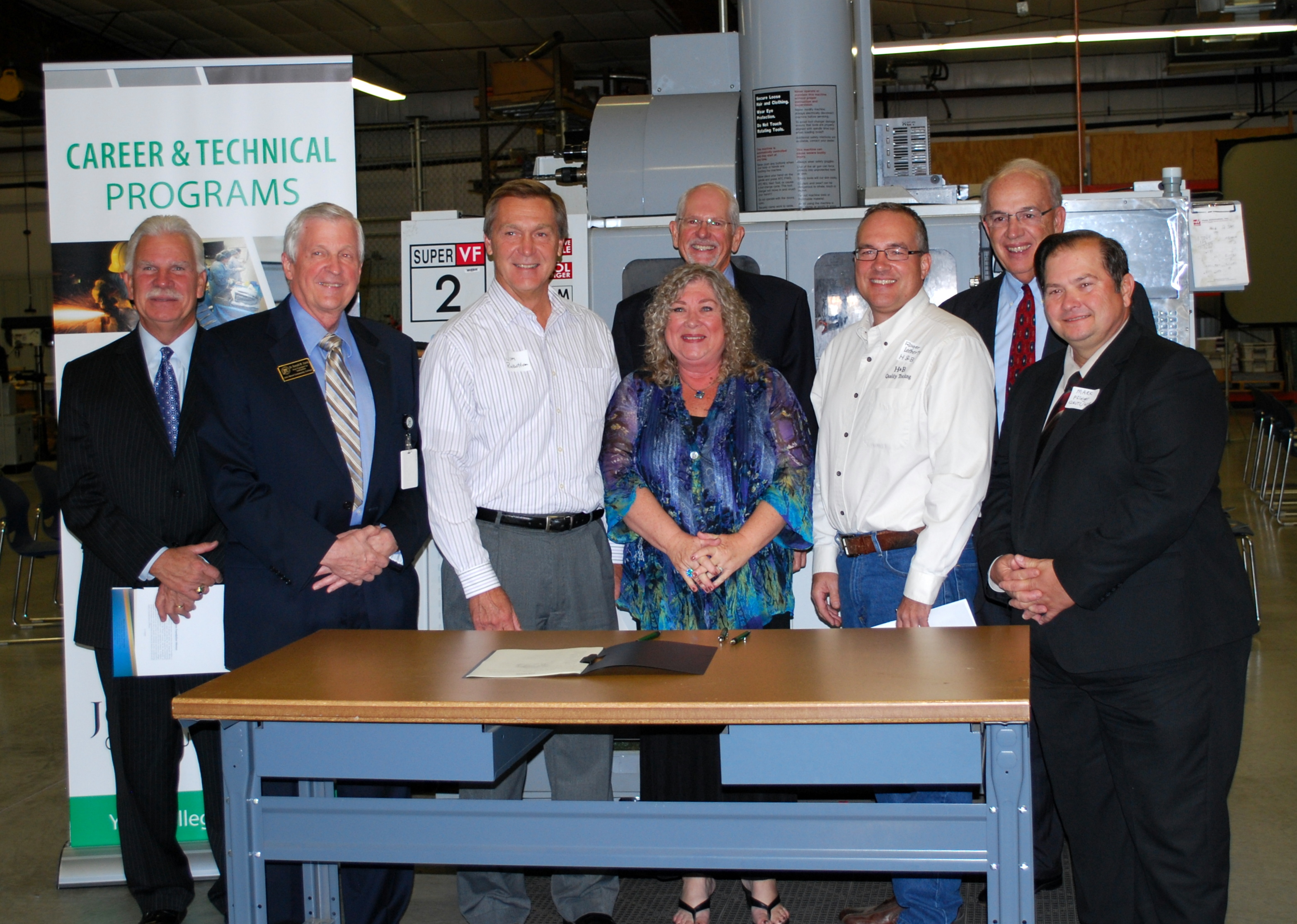
The new world of advanced manufacturing requires a drastically different set of skills from its workforce. On October 25, 2012, private business, education and economic development leaders signed a charter to formalize the “Pathways to Results” process.  The process aligns K-12 coursework with college degrees and business resources to give students the new skills needed to ensure family-sustaining careers in our region’s manufacturing sector.

The signing is the latest step in a concentrated effort to change the perception of manufacturing and build the workforce of tomorrow. The charter collectively commits business and K-college entities to clearly define a path for manufacturing careers while boosting resources, equipment and expertise available for students to attain careers in the high-tech industry.

Defining the Path

High school students have clearly defined pathways leading to four-year college degrees. Therefore, parents and the community have an expectation that their high school students will pursue a four-year degree even though many college students have no real idea what career they might pursue upon graduation.

Manufacturing jobs do not currently have a defined educational pathway, which is an even bigger obstacle for parents and counselors trying to guide students into these high demand jobs.

Pathways to Results seek to insert a systematic process for communication with high schools including pathways, preparation, transition and curriculum alignment to make things clearer for students and their advocates.

“It is hard enough for students to know which career path to choose,” Pam Foust, dean of career and technical education at JWCC said. “When they determine a focus, possibly in high school, they might find that they haven’t taken the courses to enter college ready to master evolving skills employers want. What Pathways to Results does is to clearly define the math, science and critical thinking skills that need to be in courses from kindergarten through high school.  With these basic skills, any evolving manufacturing technology can be learned from college instructors who will have access to the latest equipment and processes.”

Funding the Process

JWCC received a $10,000 grant from Office of Community College Research and Leadership as part of the state’s effort to improve career pathways.  The College and its partners intentionally linked Pathways to Results funding with a federal grant in an effort to grow a skilled workforce to fulfill current and future manufacturing industry needs.

Phil Conover, interim president of the Great River Economic Development Foundation, announced that as a result of collaborative partnerships, John Wood Community College received a $525,769 grant from the Trade Adjustment Assistance – Illinois Network for Advanced Manufacturing Grant (TAA-INAM).  JWCC is one of 20 Illinois community colleges that received funding from the Department of Labor.

“Because of the partnerships built over the last several years, this funding uniquely positions the region to prepare future technicians, engineers and managers as our manufacturing industry expands,” Conover said.  “This process, when integrated, is a tremendous platform to attract new manufacturers to the region because we will have the skilled workforce they require to be successful.”

The half million dollar grant will be received over a three-year period to expand and improve the delivery of career manufacturing training programs.  The training will lead to industry-recognized certificates or associate degrees that can be completed in two-years or less to meet regional employer needs.

Funding will provide for equipment, course development, advising, instructional support, software, program coordination, internship mentoring, tutoring and supplies.  The grant will also fund the hiring of personnel to help students transition from high school to college and college to careers.

In addition to state and federal funding, Lauren Kiest, an owner in aNH3, a company that supplies  products for the agricultural industry, recently created a private manufacturing scholarship with the JWCC Foundation to help students access funds to receive the new skills training needed for today’s industry.

Current Climate

Manufacturing accounts for 17 percent of this region’s economy, yet few students are transitioning from high school to John Wood Community College’s manufacturing program.  JWCC is the only area institution to offer specific degrees and certificates leading to careers the industry demands.  Currently four JWCC students have declared advanced manufacturing as their major.  Twenty-six JWCC students are pursuing welding certificates or degrees; 12 are pursuing a degree in computer-aided design (CAD); and 39 students have declared their intent to earn a degree or certificate in electrical technology.

At the high school level, Quincy Area Vocational Center (QAVTC) has a total of 35 students in day technical programs including CAD/drafting, electronics, precision metals and welding.  Twenty students from rural schools are enrolled in QAVTC’s evening programs. An additional 80 students are enrolled in Project Lead the Way at QAVTC.
Adams County Board Chairman Mike McLaughlin, JWCC President Dr. John Letts, Quincy Mayor John Spring and Interim GREDF President Phil Conover at October 5, 2012, National Manufacturing Day Press Conference

Workforce shortages are growing in areas such as industrial maintenance, (programming and maintaining technologically advanced equipment), precision machining, welders and automation systems. The current high school and college students studying for these careers will not come close to filling current and future positions available with the area’s 100 manufacturing firms.

“Manufacturing is a whole new world,” Roger Leenerts, business owner and Pathways to Results charter member said.  “For many years it has not been suggested as an ideal career path, that it is low paying, dirty and unstable.  The reality is that it requires a highly skilled workforce to maintain high tech machinery.  We want high school students to see manufacturing as a career, not just a job.”

Not Your Dad’s Plant – Perception Change Manufacturing has been the economic engine of the region for decades, but gone are the days of man-made assembly lines with workers assembling various product parts.  The industry is rapidly evolving, with clean work environments and head-of-household wages waiting for employees with the right skills.

Students with manufacturing degrees can earn upwards of $60,000 because they possess the knowledge and skills to manage all or portions of automated processes from design, logistics and production.  Candidates with specialized knowledge of electrical and computerized components of automated machines can earn between $35,000 and $50,000.  Welders are in high demand and can earn $20 an hour with basic knowledge and much more with additional training. Most manufacturing jobs include solid benefits.

More information is available by contacting Foust at 217.641.4956 or pfoust@jwcc.edu.
Great River Economic Development Foundation
John Wood Community College
Workforce Investment Board of Western Illinois

IMEC Lean Manufacturing Overview with Simulation Workshop

IMEC Lean Manufacturing Overview with Simulation Workshop February 28, 2012

[share] Meeting today’s manufacturing challenges demands a lean enterprise – streamlining product design and manufacturing by applying Lean Manufacturing principles, concepts and techniques. The primary focus of this effort is the continuous elimination of waste in the company’s business processes. Implementing Lean practices involves changing a work area or a business process to maximize efficiency, improve quality and safety, eliminate unnecessary motion and inventory, and save time and resources.

What Can You Expect from The Lean Overview with Simulation?

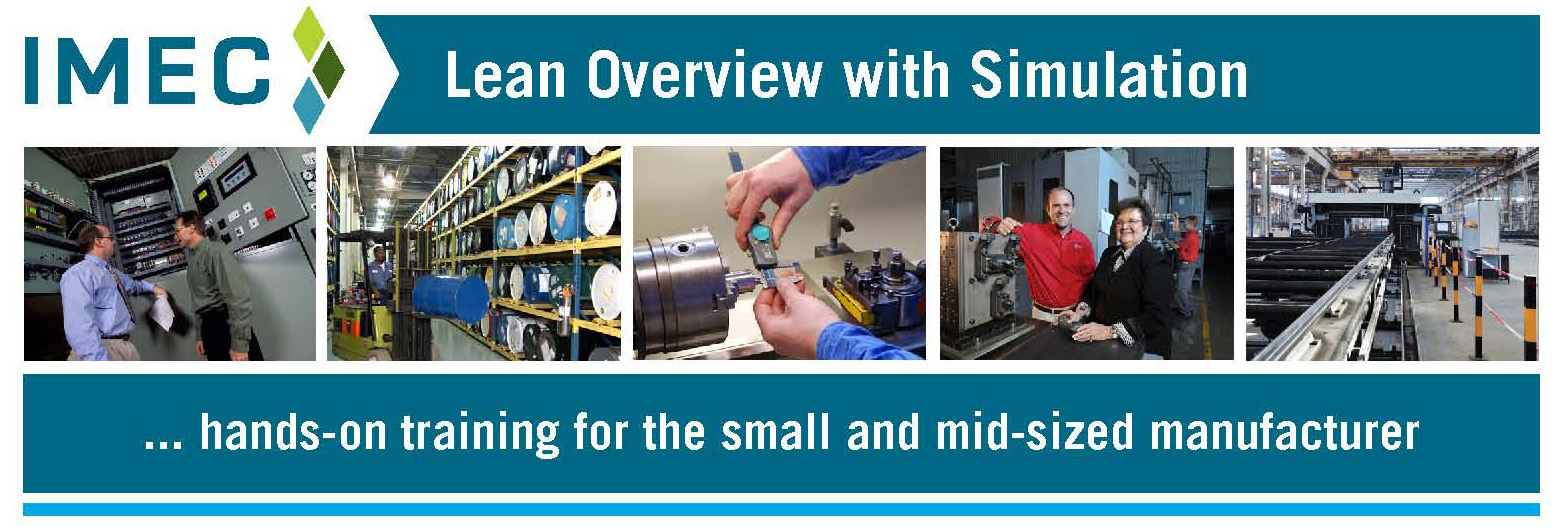
This interactive workshop combines comprehensive classroom instruction with simulation of a production facility. The basic concepts of Lean Manufacturing and the tools and methodology necessary to implement “Lean” on the shop floor are demonstrated. Participants assume the role of production workers, applying Lean tools to their individual workspaces and the entire product line. This learn-do technique, over four “shifts”, illustrates cause and effect relationships for each of the Lean tools presented.

Participants review methodology and lessons learned from previous shifts, deciding what and how to implement while working with realistic constraints such as available resources, cash flow and resistance to change.

Take Experience Back to Your Facility

Following the Lean Manufacturing Overview and Simulation, participants will have learned several new techniques to aid you in the Lean transformation on-site. You’ll be able to:

  • Differentiate between a “push” and a “pull” system
  • Identify the eight (8) wastes that must be eliminated to make the manufacturing processes Lean
  • Explain how those wastes reduce company profits
  • Understand the functions of a Kanban system
  • Make more effective use of the employee’s time following waste elimination


MARCH 15, 2012  8:00AM – 4:00PM

John Wood Community College
Workforce Development Center
4220 Kochs Lane, Room W136
Quincy, IL 62305

AGENDA
Round 1 – Traditional Manufacturing  8:00AM
Round 2 – Standardized Work, Visual Controls Workplace Organization (5S)  10:00AM
Break – Lunch  12:00PM
Round 3 – Batch Size Reduction, Point of Use Storage, Quality at the Source  12:30PM
Round 4 – Pull Systems, Cellular/Flow Manufacturing, Takt Time, Work Balancing  2:00PM

FEES: $229 per person (includes lunch and all training materials)

REGISTRATION
Register your company seat(s) at www.imec.org, or call IMEC at 888.806.4632.

INFORMATION
Contact David Padgett, IMEC Business Development Specialist, at 618.581.8076 or DPadgett@imec.org.

SPONSORS
John Wood Community College, IMEC, Manufacturing Improvement Specialists, Great River Economic Development Foundation, Quincy Area Chamber of Commerce, Workforce Investment Board of Western Illinois

Area Manufacturers Hiring Skilled Workers

Area Manufacturers Hiring Skilled Workers February 6, 2012

New JWCC Welding Training Opens Pipeline of Skilled Workers for Area Manufacturers

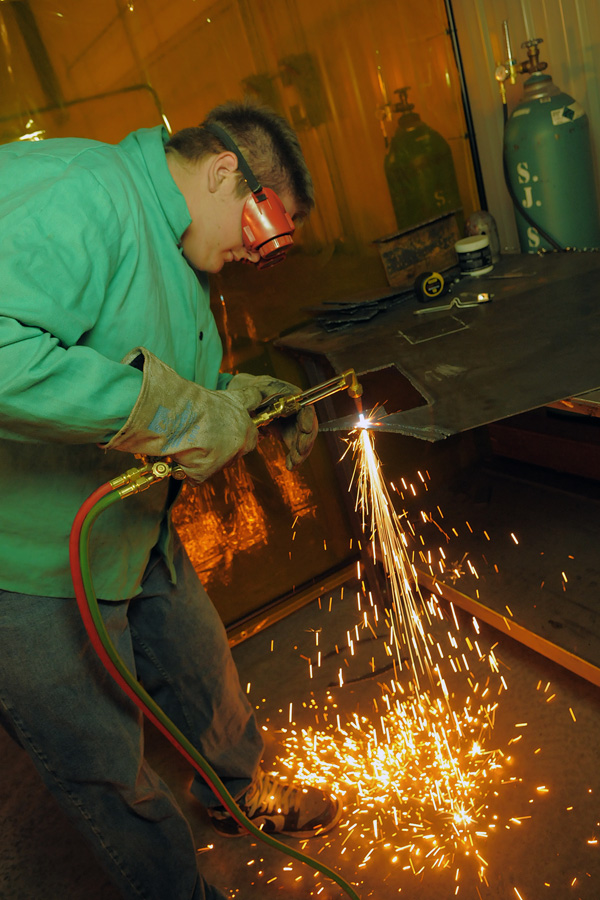
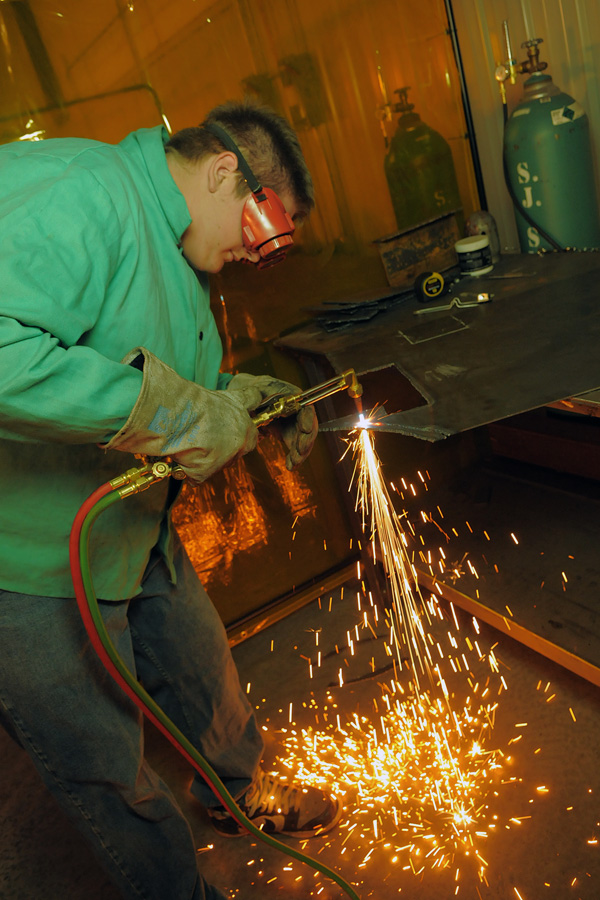
[share] A new four-week basic welding training program at John Wood Community College is opening a pipeline for area manufacturers seeking skilled workers for dozens of open positions.

Because of the need to place welders in immediate openings, John Wood created a program to help manufacturers connect with prospective employees armed with basic welding skills.

“In just four weeks, students can have a valuable skill that is in huge demand,” Pam Foust, JWCC dean of career and technical education said. “We have a least four employers telling us they need employees with these basic welding skills, so this training can help get their foot in the door.”

The new condensed welding program includes a basic welding class and lab and a course in welding symbols and blueprint reading. All are taught by an experienced, local welding professional at JWCC’s Workforce Development Center at 4220 Kochs Lane in Quincy.

“John Wood is helping us build a qualified employment pool,” Tom Schilson, general manager of Manchester Tank said. “We need employees with the welding skills to hit the ground running. Having that basic skill set and building on it brings value to the company and the employee.”

In addition to welding skills, JWCC helps students prepare for employment interviews and offers advice on key soft skills necessary to secure a job.

Knapheide Manufacturing Human Resource Specialist Mike Dailing says that prospective employees need both technical and soft skills to be successful employees.

“We definitely need more qualified workers, but if a prospective employee doesn’t have the soft skills such as dependability, motivation and communication, it is unlikely they will have a career with any company,” Dailing said. ”If an employee doesn’t show up on time, has a poor attitude and doesn’t work well with others, knowledge of a particular field doesn’t matter much.”

Patrick Allen of Hannibal, Mo., will complete his JWCC welding certificate in March and already has a job lined up with Knapheide Manufacturing.

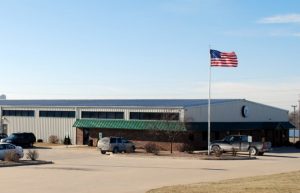
John Wood Community College Workforce Development Center

“I like the construction part of welding and grew up watching my grandpa weld in his garage,” Allen said. “I started out as a carpenter, and took a temporary job while going to school, but it’s pretty clear that there are greater opportunities for people who have advanced welding skills, specifically MIG welding.”

Allen says the new four-week basic welding course is a great for someone looking to get into the field, but continued education is key.

“The basics help you learn what welding is all about, but in the long-run you need to learn more than just what’s in the book, you need to apply what you learn,” Allen said. “If you take the basics, get a job and then come back for more advanced classes, I think you can have a great career in welding.”

Following the four-week training, students can add to their knowledge of welding by continuing their education at JWCC. By completing just three additional courses to earn a certificate, a basic welder could gain increased pay and responsibility depending upon their employer’s needs and qualifications.

Some companies send employees directly to the training or partner with JWCC for on-site courses. Quincy-based Konstant Products currently has two groups of employees seeking welding certification at JWCC’s Workforce Development Center and Westermeyer Industries offers JWCC courses for employees and high school students at its plant in Bluffs.

The first four-week welding session runs from February 13 to March 8. Students take classes Monday through Thursday from 9 a.m. to 3:30 .m. Additional sessions will be offered March 12 to April 5 and April 9 to May 5. Information about how to enter the welding preparation program and possible funding is available at jwcc.edu/weldingprep or by contacting JWCC at 217.641.4329 or admissions@jwcc.edu.

Workforce Development in the Tri-States

Workforce Development in the Tri-States January 10, 2011

Workforce Development in Adams County and Quincy, Illinois[share]John Wood Community College continues to be a valued partner in workforce development issues. At a little over a year old, the college’s state-of-the-art workforce development center has become the premier training facility in west central Illinois.

At a time when many communities are just beginning to look at workforce development in response to the national economic climate, the Quincy area is turning out workers that fit local business and industry’s specific needs.

Among the college’s seventeen career training and workforce education programs are truck driver training, electrical technology, construction technology, fire science, nursing, health education, restaurant management and sustainable local foods. JWCC recently launched customized training in aluminum welding in addition to its current welding program in response to area workforce demand.

A number of local companies including Manchester Tank and ADM continue to work with John Wood to develop programs specific to their workforce needs.

All of these initiatives contribute to John Wood Community College’s role as an essential partner in not only workforce development, but also in the retention of our region’s robust manufacturing base.

We know availability of skilled labor ranks near the top of site selection and expansion decisions. That’s why we continue to place a high value on workforce development within our tri-state region.

Read our 2010 press release about the Workforce Development Center Here.

Visit www.jwcc.edu for more information.

Upcoming Workforce Development Event:

GREDF is partnering with John Wood Community College and Illinois Department of Commerce and Economic Opportunity to sponsor a Construction Workshop on February 22nd. It is a day-long event to be held at John Wood’s Workforce Development Center. For more information, contact GREDF at 217-223-4313, gredf@gredf.org or Phil Conover at 217-641-4956, pconover@jwcc.edu.

GREDF

Links

  • About
  • Newcomer Concierge
  • Why Here
  • Site Selectors
  • Workforce Solutions

GREDF

501 Hampshire St
Quincy, IL 62301
Phone: (217) 223-4313
IL
facebook
twitter
linkedin
roq
© 2026 Great River Economic Development Foundation. All Rights Reserved.