Would you like to know how your supervisors can make you more successful? Here’s a few interesting
facts…
A well trained supervisor can save money on hiring! The average cost of replacing a first line employee that makes $8 per hour is $3,500 (SHRM research).
A well trained supervisor can improve productivity! According to a Gallup survey in 2004, poorly managed workgroups are an average of 50% less productive and 44% less profitable.
A well trained supervisor can help create a great place to work! According to a Monster.com survey, bad managers are the #1 reason people lose their temper at work – a 39% rate.
A well trained supervisor can protect your company! The average jury verdict in a wrongful termination case is $640,000 and companies lose 64% of the cases. National Institute for Advanced Conflict Resolution.
A well trained supervisor can help retain talented employees! Inc. Magazine estimates that 70% of turnover is due to poor management.
AAIM Employers’ Association would like to introduce you to 90 Days to Success, a proven supervisory training program that will provide your supervisors with the skills they need to help your company be successful. AAIM EA is bringing 90 Days to Success training program to the Quincy area beginning in January at a special introductory rate.
REGION CHARTERS COURSE TO TRAIN STUDENTS FOR ADVANCED MANUFACTURING CAREERS
November 1, 2012
[share]
Pathways to Results Process Connects Education and Business Resources; $500,000 Grant Boosts Effort
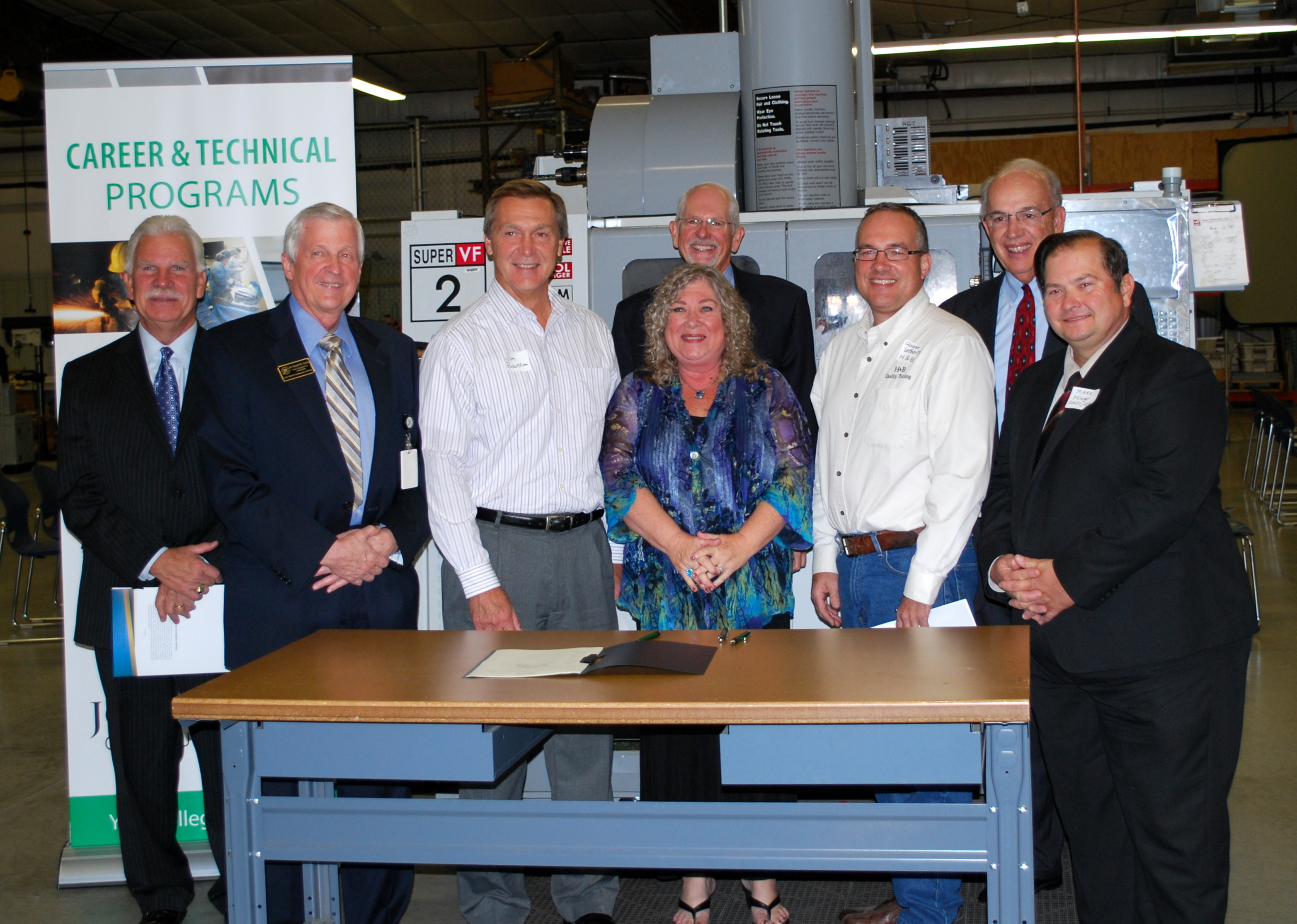
The new world of advanced manufacturing requires a drastically different set of skills from its workforce. On October 25, 2012, private business, education and economic development leaders signed a charter to formalize the “Pathways to Results” process. The process aligns K-12 coursework with college degrees and business resources to give students the new skills needed to ensure family-sustaining careers in our region’s manufacturing sector.
The signing is the latest step in a concentrated effort to change the perception of manufacturing and build the workforce of tomorrow. The charter collectively commits business and K-college entities to clearly define a path for manufacturing careers while boosting resources, equipment and expertise available for students to attain careers in the high-tech industry.
Defining the Path
High school students have clearly defined pathways leading to four-year college degrees. Therefore, parents and the community have an expectation that their high school students will pursue a four-year degree even though many college students have no real idea what career they might pursue upon graduation.
Manufacturing jobs do not currently have a defined educational pathway, which is an even bigger obstacle for parents and counselors trying to guide students into these high demand jobs.
Pathways to Results seek to insert a systematic process for communication with high schools including pathways, preparation, transition and curriculum alignment to make things clearer for students and their advocates.
“It is hard enough for students to know which career path to choose,” Pam Foust, dean of career and technical education at JWCC said. “When they determine a focus, possibly in high school, they might find that they haven’t taken the courses to enter college ready to master evolving skills employers want. What Pathways to Results does is to clearly define the math, science and critical thinking skills that need to be in courses from kindergarten through high school. With these basic skills, any evolving manufacturing technology can be learned from college instructors who will have access to the latest equipment and processes.”
Funding the Process
JWCC received a $10,000 grant from Office of Community College Research and Leadership as part of the state’s effort to improve career pathways. The College and its partners intentionally linked Pathways to Results funding with a federal grant in an effort to grow a skilled workforce to fulfill current and future manufacturing industry needs.
Phil Conover, interim president of the Great River Economic Development Foundation, announced that as a result of collaborative partnerships, John Wood Community College received a $525,769 grant from the Trade Adjustment Assistance – Illinois Network for Advanced Manufacturing Grant (TAA-INAM). JWCC is one of 20 Illinois community colleges that received funding from the Department of Labor.
“Because of the partnerships built over the last several years, this funding uniquely positions the region to prepare future technicians, engineers and managers as our manufacturing industry expands,” Conover said. “This process, when integrated, is a tremendous platform to attract new manufacturers to the region because we will have the skilled workforce they require to be successful.”
The half million dollar grant will be received over a three-year period to expand and improve the delivery of career manufacturing training programs. The training will lead to industry-recognized certificates or associate degrees that can be completed in two-years or less to meet regional employer needs.
Funding will provide for equipment, course development, advising, instructional support, software, program coordination, internship mentoring, tutoring and supplies. The grant will also fund the hiring of personnel to help students transition from high school to college and college to careers.
In addition to state and federal funding, Lauren Kiest, an owner in aNH3, a company that supplies products for the agricultural industry, recently created a private manufacturing scholarship with the JWCC Foundation to help students access funds to receive the new skills training needed for today’s industry.
Current Climate
Manufacturing accounts for 17 percent of this region’s economy, yet few students are transitioning from high school to John Wood Community College’s manufacturing program. JWCC is the only area institution to offer specific degrees and certificates leading to careers the industry demands. Currently four JWCC students have declared advanced manufacturing as their major. Twenty-six JWCC students are pursuing welding certificates or degrees; 12 are pursuing a degree in computer-aided design (CAD); and 39 students have declared their intent to earn a degree or certificate in electrical technology.
At the high school level, Quincy Area Vocational Center (QAVTC) has a total of 35 students in day technical programs including CAD/drafting, electronics, precision metals and welding. Twenty students from rural schools are enrolled in QAVTC’s evening programs. An additional 80 students are enrolled in Project Lead the Way at QAVTC.
Adams County Board Chairman Mike McLaughlin, JWCC President Dr. John Letts, Quincy Mayor John Spring and Interim GREDF President Phil Conover at October 5, 2012, National Manufacturing Day Press Conference
Workforce shortages are growing in areas such as industrial maintenance, (programming and maintaining technologically advanced equipment), precision machining, welders and automation systems. The current high school and college students studying for these careers will not come close to filling current and future positions available with the area’s 100 manufacturing firms.
“Manufacturing is a whole new world,” Roger Leenerts, business owner and Pathways to Results charter member said. “For many years it has not been suggested as an ideal career path, that it is low paying, dirty and unstable. The reality is that it requires a highly skilled workforce to maintain high tech machinery. We want high school students to see manufacturing as a career, not just a job.”
Not Your Dad’s Plant – Perception Change Manufacturing has been the economic engine of the region for decades, but gone are the days of man-made assembly lines with workers assembling various product parts. The industry is rapidly evolving, with clean work environments and head-of-household wages waiting for employees with the right skills.
Students with manufacturing degrees can earn upwards of $60,000 because they possess the knowledge and skills to manage all or portions of automated processes from design, logistics and production. Candidates with specialized knowledge of electrical and computerized components of automated machines can earn between $35,000 and $50,000. Welders are in high demand and can earn $20 an hour with basic knowledge and much more with additional training. Most manufacturing jobs include solid benefits.
More information is available by contacting Foust at 217.641.4956 or pfoust@jwcc.edu.
YOU ARE INVITED!
2012 Tri-State Housing Summit – June 7
The Tri-State Development Housing Task Force invites you to join elected officials and business/industry leaders for a day of dialogue about housing issues our region faces including resources, shortfalls and opportunities.
Adequate housing – like highways, healthcare and retail establishments – is necessary to achieve desired growth and quality of life in a region. For that reason, the Tri-State Development Summit established the Housing Task Force in 2005.
Our tri-state region is not immune to housing issues that communities around the country face – availability, affordability and quality. That’s why the Housing Task Force’s mission is to provide affordable workforce housing in the tri-state area. This includes:
Increasing affordable housing options for the region’s workforce
Providing counseling to first-time home buyers
Identifying funding sources for housing development throughout the region
The creation of affordable housing can increase community pride, help attract industry and increases property values and the community tax base. Please join us Thursday, June 7, 2012 on the Campus of Culver Stockton College. Agenda and registration details are below.
Chuck Scholz, Member, Tri-State Development Summit Steering Committee
Details & Registration:
DATE: Thursday, June 7, 2012
LOCATION: Culver Stockton College, Canton, MO
TIME: 8:00 am Registration, 8:45 am – 2:45 pm Program
COST: Free (lunch is furnished)
DEADLINE: Friday, May 25, 2012
To Register / For More Information:
Email or call Carla Potts (cpotts@necac.org or 573-324-6622) with the following information (You will receive more details including location and parking instructions upon registration):
Name
Organization
Address
Phone
Email Address
# Attending
2011 Business Developments: Annual Meeting Recap
January 17, 2012
[share] 2011 was another great year for the Quincy/Adams County, Illinois region. The following is the “Business Developments” section of the speech our 2010/2011 GREDF chair, Connie Schroeder, gave during our 2012 Annual Meeting on January 11, 2012.
Our job at GREDF is to tell our story, that is, the story of Quincy and Adams County, Illinois. We do this in letters, emails and phone calls, on our website and most importantly, through personal contact with current and prospective businesses and you, our stakeholders.
We’re continuously refining our message and we’re blessed to have a wealth of resources about which to boast: transportation infrastructure, skilled workforce, educational opportunities, arts and culture.
We find examples and success stories help our message become more real to our audience. So please allow us to tell our story to you and share some good news from 2011 as we embark on a new chapter in 2012.
2011 Business Developments in Quincy and Adams County, Illinois:
Prince Agri Products, which you’ll remember built a 150,000 square foot, $18 million dollar facility in 2010, announced this past September the acquisition of a new product line called Animate. The company has added over 40 jobs to the Quincy-area economy during the past 2 years and currently employs over 100 people. They continue to recruit for head-of-household positions in manufacturing, laboratory, quality supply chain and I.T.
Federal Express Facility Now Under Construction
Titan International purchased the former Huck Fixtures facility and plans to put part of its wheel production in the 100,000 square foot building this year. Titan reported record sales in the third quarter of 2011, up 79percent from the third quarter in 2010.
Federal Express broke ground on a new $1.5 million dollar, 28,000 square foot facility located on six acres in the Wismann Ridge Business Park in August.
The Spin Screed, the world’s lightest-weight roller screed which was invented and built in Quincy, was chosen by contractors to be used during a major remodel of the Boeing Manufacturing Plant in Everett, Washington. The plant is considered the largest in the world. Joe and Marlene Churchill, co-owners of Spin Screed, Inc., have seen their small business grow from its start 11 years ago to the point where the Spin Screed is now being used in major projects worldwide.
U.S. Cooler is celebrating 25 years as a leading manufacturer of commercial walk-in freezers & coolers. During its history, the family-owned company has preserved a historic firehouse in downtown Quincy for its corporate headquarters and adapted green technology into its products. U.S. Cooler currently employs over 65 people in 7 States.
Timewell Tile/ADI Installation Employee
Timewell Tile continues to grow in its Golden facility, the former home of the Methode Plant. The company’sentire A.D.I. Installation Division was recently moved to the Golden facility which led to the construction of a new 5,000 square foot machine shop building. The A.D.I. Division joins the Transportation Division and Fitting Fabrication Division in Golden, which was relocated from a Michigan Plant. A production line runs 24 hours a day seven days a week out of the facility. 81 employees are currently based out of the 95,000 square foot building.
Word came in December that the decision to close 252 United States Postal Service mail processing facilities nationwide including the Quincy facility would be delayed until at least May of 2012. GREDF, City officials and Mayor Spring worked successfully with Illinois and Washington lawmakers, including Senator Dick Durbin, to save the facility back in 2010, but a U.S.P.S. deficit in 2011 has prompted the agency to again look at taking drastic measures. Closing the facility would eliminate next-day delivery within the region and 60 to 70 positions. GREDF continues to support efforts to keep the facility open.
Harris Corporation won a 2011 Governor’s Sustainability Award for Continuous Improvement. They received the recognition for their ongoing commitment to environmental excellence through outstanding and innovative sustainability practices.
Tim and Tamie Lung, owners of the Crawdad’s Classic brand of products out of Camp Point are poised for growth in 2012. The company has launched a national marketing campaign and hopes to eventually bring bottling operations to the Adams County area.
An AT&T Cell Phone Outlet and Aspen Dental Office are now open at the corner of 52nd and Broadway in front of Walmart. GREDF assisted Quattro Development with the project and we were pleased to receive a letter addressed to Jim Mentesti from the developer stating, “Without question, the experience we’ve had working with you, your staff, and the Quincy municipal officials is the best we’ve encountered.” AT&T Illinois President Paul La Schiazza came to the store opening on December 8th.
F&M Bank and Trust Company purchased the parcel east of Aspen Dental from Quattro Development. The Bank plans to start construction on a full service branch in 2012. GREDF assisted F&M in the selection of the site.
T.F. Ehrhart Company is constructing a new building at 42nd and Koch’s Lane in the East Quincy Development District. The company has been supplying heating and air conditioning equipment to contractors throughout Western Illinois for over 55 years.
Good Samaritan Home continues to move forward on its $20.7 million dollar multi-phase renovation. When completed all types of senior housing will be available, from independent cottages to full-time nursing care units.
Activity in the Schneidman Industrial Park continued in 2011 with the addition of Tillitt Collision Repair and Moore’s Floors which expanded into a 15,000 square foot building in order to enhance its commercial flooring operations.
Preliminary site work has been completed at the future home of the U.S. Army Reserves Center Training Facility. The facility will be located at 24th and Weiss Lane in the Northwood Business Park and site plans include a training building, vehicle maintenance shop and storage building.
JM Huber Expansion
Farmers Bank of Liberty plans to establish a branch at 4134 Broadway in Quincy after purchasing the former restaurant building.
J.M. Huber just completed an 18,000 square foot addition to its facilities in the South Quincy Development District. The expansion will house a production line for Huber’s food and pharmaceutical-grade of calcium carbonate. The product is currently being made in their California facility, but the economics made it more attractive to build in Quincy than expand in California.
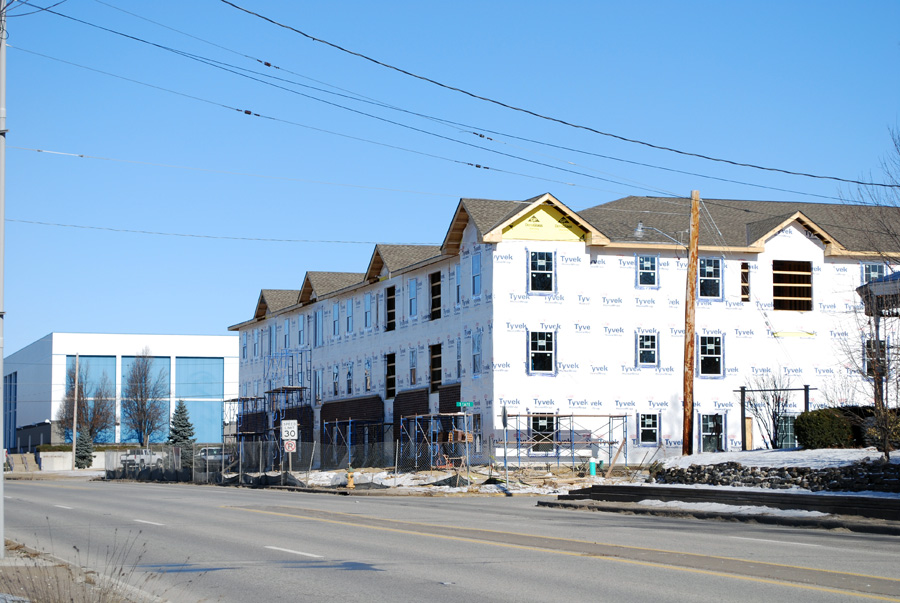
City officials are close to approving the site plan for a 50-unit, two-story, 64,000 square foot senior apartments complex at 48th and State.
Bank of Springfield announced plans to move its Quincy branch from 18th and Broadway to 1111 Maine in downtown Quincy. The branch could open as early as late spring.
Speaking of downtown Quincy, our partnership with the Historic Quincy Business District and executive director Travis Brown is as strong as ever. We are pleased to share that downtown Quincy’s occupancy rate is currently at 91 percent. Some of the 2011developments that contributed to this tremendous number include:
The Salvation Army Ray and Joan Kroc Corps Community Center
The opening of the $27.2 million dollar Salvation Army Ray and Joan Kroc Corps Community Center in September.
The opening of First Bankers Trust Company’s 30,000 square foot, $5 million dollar banking facility at 12th and Broadway in May.
The opening of the 48-unit, $9.2 million dollar Franklin Square Apartments complex at 3rd and State which company officials tell us quickly filled and remains at full occupancy.
The opening of Cape Air’s ticket office at 727 Hampshire which is located in a block of beautifully rehabilitated and newly-leased buildings thanks to local developers, Austin Properties.
And the opening of a number of high-end restaurants including The Maine Course, ONE Restaurant and Bar and Talayna’s.
We’re excited to see work nearing completion at 8th and Jersey thanks to Ameren Illinois’ site remediation program. As the $30 million dollar clean-up is completed we look forward to working with our H.Q.B.D. partners to find the right developer and project for the site.
2011 also saw the $5.5 million dollar renovation of the Quincy Public Library and Awerkamp Machine Company’s completion of a new warehouse at 716 Vermont in the downtown.
GREDF’s Entrepreneurship Specialist, Charles Bell had another busy year in 2011. He assisted over 70 businesses with startup and expansion planning, site location and financing. Charles helped Adams County businesses and entrepreneurs navigate a variety of financial incentive programs available to them, including the Rural Adams Development Corporation, Adams County Revolving Loan Fund, GREDF Central Business District Revolving Loan Fund, Adams Electric Revolving Loan Fund and Two Rivers Revolving Loan Fund. Specific examples of assistance include the expansion of Alliance Industrial Corporation on Highway 57 and the construction of a soybean treatment and warehousing facility owned by Chuck and Mary Beckman near Paloma.
IAQ Annual Meeting Materials
August 15, 2011
[share] Dr. Bob Graboyes, Senior Fellow for Health and Economics, NFIB Research Foundation, gave a speech entitled “Healthcare Reform: How High’s the Water, Mama?” at the 2011 Industrial Association of Quincy Annual Meeting on August 15th.
PDFs of his presentation, supplemental materials and 2 recent articles are below. For more information and writings from Dr. Graboyes visit www.NFIB.com/DrBob and www.robertgraboyes.com.
Tri-State Summit Entrepreneurship Task Force Event
April 12, 2011
[share]Small Biz Leadership Luncheon
The Entrepreneurship Task Force of the Tri-State Development Summit will be holding a luncheon for small businesses and entrepreneurs on Wednesday, May 25th at Tiramisu Restaurant in Quincy. The event will be held from 11:30am – 1:00pm and will cost $15 per person which includes lunch.
The event will be the first in a quarterly series to rotate among Illinois, Iowa and Missouri. The objectives of the events are to provide entrepreneurs and small business owners with local economic information, business-related tips and advice and networking opportunities with other business owners and entrepreneurs.
Speakers will vary from session to session depending on current events and current business topics. The events will offer opportunities for entrepreneurs and small business owners to network with each other with the hope that they can collaborate, share business ideas and help each other with shared opportunities, concerns and issues.
For the first session, speakers will include Jim Mentesti, President of Great River Economic Development Foundation and Eric Thomas, President of ETC ComputerLand. Mr. Mentesti will speak to the group about the current economic environment of our region. He will also share updates on current significant projects impacting businesses in the tri-state region. Mr. Thomas will give a Social Media for Business presentation. The presentation will give businesses the basics of what social media is and how they should or could be using it to increase their visibility.
Registration will be $15 per person which also includes lunch. Pre-registration is required by May 20th. The attached Registration Form should be sent to Megan Backs at GREDF at meganb@gredf.org.
2011 signifies the 15th year for the Tri-State Development Summit. In the 15 years since the inception; the Summit Region has adopted numerous Task Forces and achieved many successes in each of those task force areas. The Summit Region now comprises 35 counties in NE Missouri, SE Iowa and Western Illinois.
Steering committee members have also announced that the 9th Tri-State Development Summit will take place October 5, 2011 in Quincy, Ill. The mission of the Tri-State Summit is to bring together leaders in Southeast Iowa, Northeast Missouri and Western Illinois to define common issues; to develop an on-going dialogue to effectively address those issues; and to improve the quality of life of the entire tri-state region through economic development activities.
A Look Back at 2010: Rural and Regional Happenings
February 28, 2011
The seventh in our series of articles highlighting the remarks of GREDF Board Chairperson, Connie Schroeder at our 2011 Annual Meeting.
[share] A look back at RURAL and REGIONAL HAPPENINGS in the tri-states in 2010…
The Rural Adams Development Corporation celebrated 10 years in 2010 of operating a low-interest, revolving loan fund designed to finance projects that will create and retain jobs in rural Adams County. The non-profit organization formed with the help of GREDF and includes seven rural banks. Since 1990, R.A.D.C. has provided 61 loans totaling nearly $2 million dollars. Communities that have been impacted include Camp Point, Clayton, Golden, Liberty, Mendon, Payson and Ursa to name a few.
We’re pleased to share that the R.A.D.C. has never administered a loan that has defaulted and GREDF’s own loan program has a nearly perfect record.
Someone who knows a lot about rural Adams County communities is Adams County Highway Engineer Dick Klusmeyer who put down his ruler in May after 39 years with the Highway Department, 26 of those leading its operations. Dick has been instrumental in bringing infrastructure improvements to the South Quincy Development District which led to millions of dollars in private investment and hundreds of jobs. He was also responsible for launching the award-winning Adams County G.I.S. program. We’re pleased that Dick is one of those guys who never completely stops working. He currently sits on the GREDF board and remains a staunch advocate of the Mid-America Port. Dick, thank you for your vision, service and continued support.
C&L Tiling’s purchase of the former Methode plant in Golden has turned into one of the most notable good-news stories of rural Adams County in 2010. The company has experienced tremendous growth in the past couple of years necessitating their expansion into the former plant. The move allowed them to add new production capacity to their Timewell facility by moving non-production functions to Golden including their trucking and ADI installation headquarters. They also relocated their Fittings Fabrication operations from their Michigan plant to the facility. Forty employees operate out of Golden and the company has tentative plans to add another building to the site. They also lease space to Dot Foods and Jansen Seed Company.
Big River Fish in Pearl is at the beginning stages of developing an export market to China for Asian Carp. During the last month they shipped 30 to 40 thousand-pound containers of frozen fish. Our Charles Bell assisted the company in navigating the Chinese market. Charles has traveled to China on behalf of GREDF to research export opportunities. Plans are underway for Big River Fish to open a second processing plant in Griggsville.
Midwest Crop Insurance Service, one of the nation’s largest general agencies in the Federal Crop Insurance industry, officially merged into AgriLogic Insurance Service. Their Camp Point headquarters will serve as the new A.L.I.S. Midwestern Regional Service Center. We assisted Midwest Crop Insurance with financing for the expansion that will eventually lead to over 18 new employees in Camp Point. Charles Bell also helped the company develop their international business, providing contacts and separately helping one of the owners develop an export market for a food product they plan to package locally.
A valued partner in small business development is retiring at the end of month after serving the region for 20 years. Dan Voorhis, director of the Small Business Development Center at Western Illinois University has helped hundreds of small businesses in a 12-county region develop business plans for start ups and expansions. Thank you, Dan for your friendship and service.
Ursa Farmers Cooperative celebrated 90 years in August. Over 800 partners and friends attended the annual meeting celebration. The Co-op is looking at building a new grain elevator in Canton, Missouri which is directly across the river from its Meyer facility. Between 500 to 600 of the cooperative’s 2400 members live on the Missouri side of the Mississippi River and a new elevator would help to better serve these individuals.
Tri-State Development Summit coordinator Shelby Crow has given us permission to announce tonight that the 2011 Summit will be held October 5th in this very building in the Quincy Community Theater. 2011 marks the 15th year of bringing together tri-state leaders to define common issues, to develop on-going dialogues to address those issues and to improve the quality of life of the entire tri-state region.
2010 Summit activities saw a continuation of the theme of entrepreneurship from the 2009 Summit in Fairfield, Iowa. The entrepreneurship task force held a series of workshops for entrepreneurs in all three states. Highway and river infrastructure improvements continue to remain at the top of the Summit priority list and much progress has been made.
Significant validation for the role of the Summit came in the form of census data revealing the potential loss of one seat each in the U.S. House of Representatives for Illinois, Iowa and Missouri. Now more than ever the Summit’s 35 counties must stand together to keep our political leaders aware of the issues our communities and region face.




 AAIM Employers’ Association would like to introduce you to 90 Days to Success, a proven supervisory training program that will provide your supervisors with the skills they need to help your company be successful. AAIM EA is bringing 90 Days to Success training program to the Quincy area beginning in January at a special introductory rate.




 C&L Tiling’s

