(217) 223-4313 | Contact Us
facebook twitter linkedin
GREDF
  • Regional Advantage
    • Living Here
    • Local Success and Investment
    • Infrastructure and Accessibility
    • Workforce
    • Process
    • Adams County CAREs
  • Site Selectors
    • Properties
    • Development Guide
    • Incentive Overview
    • Major Employers
  • Workforce Solutions
    • Adams County Works Teams
    • Monthly Seminars
    • Work Ready Toolbox
    • Workforce Events
      • Career Launch Signing Day
      • MakerFest
      • Career Spark
  • Newcomer Concierge
    • Living Here
    • Newcomer Concierge
  • Business Resources
    • Business Concierge Program
    • Incentive Overview
    • ScaleUp And Secure
    • Company Visits
    • Small Business and Entrepreneurs
      • Resources
      • Community
    • Black Owned Businesses
    • Quincy Strategic Plan
    • Studies and Reports
      • GROW Program
      • Quincy Riverfront Splash Pad
      • Regional Sports Complex
  • About
    • Annual Meeting Presentation
    • GREDF Strategic Plan
    • The Team
    • Partners
    • Contact Us
  • Careers
Right on Q
GREDF

Archive

Let’s Talk Career Guidance

Let’s Talk Career Guidance September 17, 2014

[share]

The Adams County Workforce Initiative began in April 2013 when more than 40 area leaders gathered to discuss workforce issues and create a platform for continued collaboration. Several key issues were identified during the April meeting and three teams were established to address the most critical of those issues.

Career Guidance Team: Working with businesses to convey to individuals the career opportunities and earning potential available in the Adams County region
Work Readiness Team: Developing work-ready citizens to become successful, productive members of the regional workforce
Succession Planning Team: Ensuring that as workers retire, the knowledge of those retirees stays with local companies and within the community

All three groups have been meeting regularly and as a result of those meetings have developed missions and goals specific to their area of workforce development. In this installment, let’s focus on Career Guidance.

Career Guidance Team

career guidance signsMISSION: Encourage, Educate & Connect
Encourage and foster awareness of careers; educate youth and job seekers about area career opportunities; build connections between families and local employers

Activities of the Career Guidance Team include:

  • Conducted survey of junior high and high school principals to assess career guidance opportunities and gaps in Adams County schools
  • Conducted “Career Roadshow” pilot project at Central (Camp Point) Freshmen Orientation night, March 13, 2014
  • Planning a second Career Roadshow for Spring 2015
  • Conducted a meeting with Adams County school counselors to develop an implementation plan for career guidance activities 
  • Hosted a joint meeting with the Work Readiness team to share both teams’ plans

The Adams County Workforce Initiative is being guided by a steering committee consisting of representatives from the Workforce Investment Board of Western Illinois, John Wood Community College, United Way of Adams County, Quincy University, West Central Region Education for Employment System #240, Quincy Public Schools, Vatterott College and the Great River Economic Development Foundation. Individuals interested in becoming a member of one of the workforce teams should contact Angela Caldwell at 217.223.4313 or caldwella@gredf.org. 

Downtown Opportunity: Premier Site Available

Downtown Opportunity: Premier Site Available March 25, 2014

[share]

LEGAL NOTICE 

Request for Proposals
400 Maine St., Quincy, IL
Great Downtown Site for Retail, Office or Residential Building

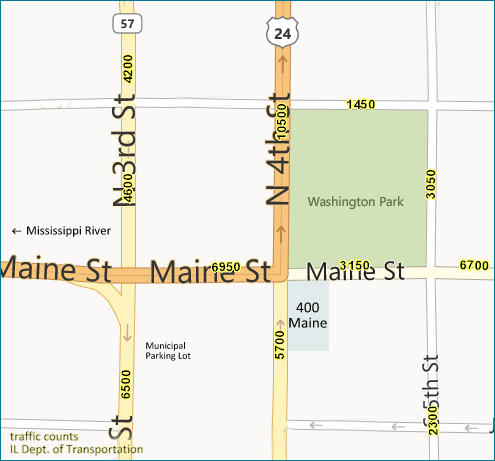
 The City of Quincy is accepting redevelopment proposals for 400 Maine St. in Downtown Quincy, IL.  The 198-ft. by 99-ft. property is located at the southeast corner of 4th & Maine Streets, across the street from Washington Park.  The property has access to a public alley at the rear.  Zoning is D3, Downtown Riverfront, allowing for a wide range of residential and commercial uses. Proposals are to be submitted in a sealed envelope to:  Interim Director of Purchasing, 730 Maine Street, Quincy, IL  62301.  The outside of the envelope must be clearly marked, “400 Maine St. Redevelopment Proposal.” 

Proposals will be accepted no later than 4:00 p.m., June 30, 2014.  RFP specifications can be found online at: http://www.quincyil.gov/bids. The City of Quincy reserves the right to waive technicalities and to reject any and all proposals.  The City of Quincy reserves the right to accept the most advantageous proposal for the city.

By order of:
James Murphy
Interim Director of Purchasing

2014 400 Maine Street Premier Property for Sale Former Newcomb Site

2014 Annual Meeting in Review

2014 Annual Meeting in Review January 14, 2014

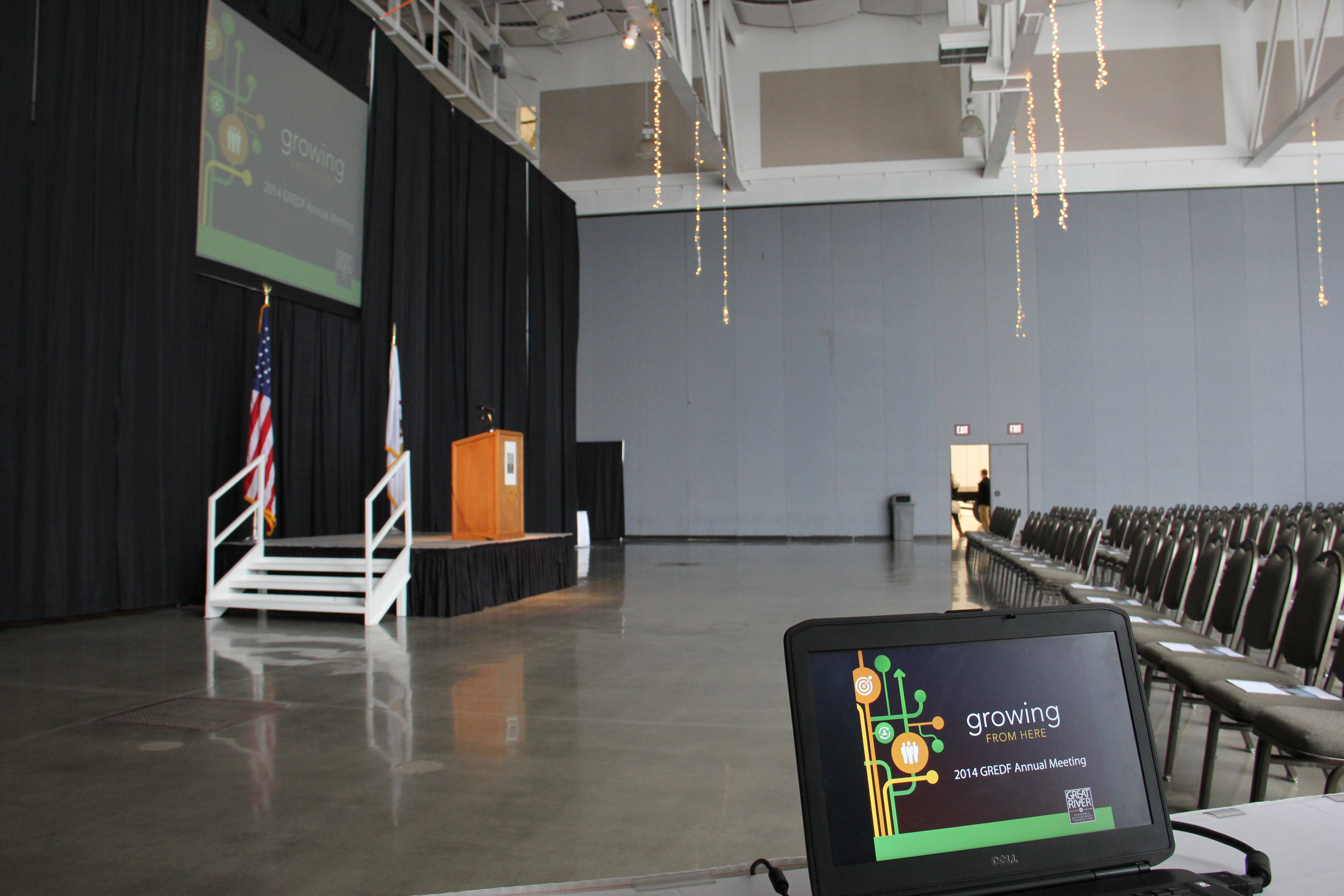
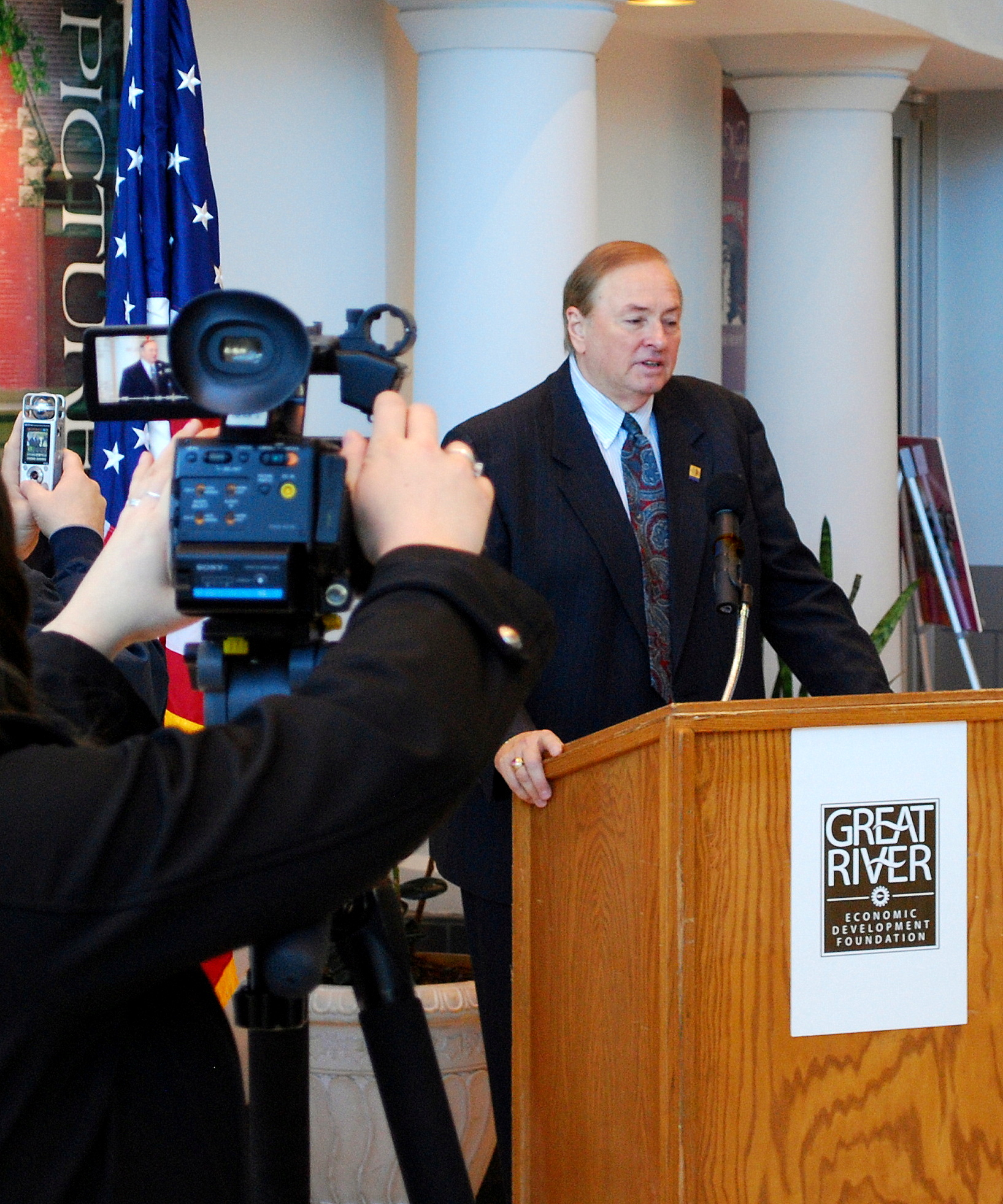
[share]Thanks to all who joined us for the 2014 GREDF Annual Meeting on January 8th. We had a great crowd and were excited to share economic development and business highlights from 2013, as well as unveil our 2014 Strategic Plan. In case you missed the evening, or would like to take a closer look, here’s the feature presentation given by outgoing Chairman of the Board, Mr. Tim Finlay.
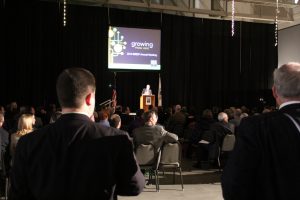
IMG_1345Great River Economic Development Foundation
2014 Annual Meeting Presentation

January 8, 2014
Presented by: Tim Finlay, Chairman of the Board of Directors

This has been an exciting year at GREDF. A year ago, we celebrated the retirement of Jim Mentesti and thanked him for his 27 years of service to our region. In March, we welcomed new GREDF President, Marcel Wagner, who has hit the ground running.

Many people have commented to me that they like to come to the GREDF Annual Meeting because this is the place they can receive an overview of the activities helping to drive positive economic growth.

Tonight, we’ll do just that, but my comments will be brief so that Marcel can introduce the new GREDF Strategic Plan to you. The Strategic Plan is the roadmap for growth for our city, county and region.  We believe tonight’s theme, “Growing from Here”, captures the spirit of this plan and the economic development activities it entails.

Our region has been blessed with a great foundation, a platform if you will, for economic growth. The river, a robust highway transportation system and homegrown manufacturing and agricultural base are just a few of the assets that make us strong. Combine these with the greatest asset we have – our people – the people that live and work here, who have vision, determination and good old-fashioned work ethic, – and we believe that our area is poised for continued growth.

Let’s take a look back at the businesses, people and activities that have laid the groundwork for the possibilities ahead, starting with business retention and expansion.

Business Retention & Expansion

Prince Agri Products is growing again. The company took advantage of the City’s Economic Development Loan Program to extend a sewer line to its $3.5 million dollar, 12,000 square-foot addition on its South Quincy Development District campus. Expecting to hire six new employees, company officials now say they’re currently looking to fill two to three times that number to keep up with demand. Prince Agri officials cited a good working relationship with City and economic development officials, and an accessible workforce among the reasons for their continued investment in the Quincy area.

Trinity Containers L.L.C., a subsidiary of Trinity Industries Inc., has doubled its workforce in Quincy over the past year. Trinity Industries Inc. is a diversified industrial company that owns a variety of market-leading businesses which provide products and services to the industrial, energy, transportation and construction sectors. Trinity Containers is a leading international manufacturer of pressure vessels that currently employs more than 100 people in their Quincy manufacturing and logistics operations.

Gardner Denver has invested heavily in their Quincy manufacturing operations over the past year. The company has made significant capital investments including the purchase of new equipment and transformation of their manufacturing footprint. In 2014, the company plans to invest over $4 million dollars locally which includes the installation of a flood wall and gates.

Titan International is on pace to set record global revenue over $2 billion dollars in 2013 thanks in part to their continuing international growth strategy. The company, which was started and is headquartered in Quincy, employs over 8,000 people worldwide including approximately 1,000 in Quincy. Titan completed construction of a new building at the former site of Huck’s Corporation in 2013 to house their state-of-the-art Powder Coat Painting System. Along with their local investments into their business and people, Titan, as with many of the companies we mention tonight, is involved in the community.

The Knapheide Manufacturing Company proudly calls Quincy home and employs over 1200 team members throughout the Great River region. As the nation’s leading manufacturer of utility body and work solutions for commercial vehicles, Knapheide witnessed tremendous growth in 2013 requiring over 150 new manufacturing associates in Quincy alone. As a result, Knapheide achieved industry-leading market share and continues to foresee robust demand and growth for 2014 and beyond. To support future growth and product demand, Knapheide continues its longstanding partnership with John Wood Community College to develop vocational training programs in order to equip its workforce with world-class manufacturing skills for today and the future.

Archer Daniels Midland Company opened an intermodal container freight shipping and receiving facility in Decatur this past fall. This means there are more shipping and logistics opportunities available to companies in the Quincy area. GREDF and ADM Alliance Nutrition hosted ADM’s Managing Director of Intermodal and Container Freight in October to speak with area businesses about these opportunities.

Blue Cross Blue Shield of Illinois hired 169 new staff members for their Quincy office in 2013, bringing local employment numbers up to 836. The company has had a number of internal promotional opportunities and continues to hire and assess needs based on anticipated growth due to the Healthcare Exchange environment.

Timewell Tile has experienced growth in the last year which is continuing into 2014. The company currently employs 260 employees compared to 215 at this time last year. Timewell opened a new manufacturing facility in Iowa, began production of a new product line at its headquarters in Timewell and added a new crew and trencher to their ADI Field Installation Division based out of Golden.

Inc. Magazine recently included major regional employer, Dot Foods, on its list of the 5,000 Fastest Growing Private Companies for 2013. The ranking is based on 2012 revenues of $4.5 billion dollars and a three-year growth rate in excess of 34 percent. When a new 110,000-square-foot cooler warehouse is completed in the next few months, the company will have the capacity to add 50 new jobs in Mount Sterling. 487 of Dot’s 2,100 employees reside in Adams County.

It’s been another groundbreaking year for Blessing Hospital and the Blessing Health System. Quincy’s largest employer is on track to complete a $70 million dollar patient care addition in January 2015. Meanwhile, the third medical office building in the Blessing Health Center was completed in June. These brick and mortar investments are joined by Blessing Health System’s biggest news of the year, its agreement with the BJC Collaborative, a partnership among health care systems throughout Illinois, Missouri and Eastern Kansas. Blessing joined the Collaborative with the goal to improve the quality and efficiency of health care in the region.

Despite the loss of the former Newcomb Hotel to fire this past fall, lots of great things are happening in the Historic Quincy Business District – new businesses, 93% occupancy, parking lots, Main Street awards and recent major announcements including the former Carson Apartments purchase by Austin Properties and the City Center Hotel purchase by Tracy Holdings which just last week signed a franchise agreement with Choice Hotels to renovate and brand the property as a new Quality Inn and Suites. Thanks to the vision of business and property owners, both small and large, downtown is growing and its future is bright.

Because business retention and expansion efforts are at the top of our priorities, GREDF partnered with the City and County to conduct a Business Survey in June of last year. Thank you to all who participated. Your feedback helped us identify the issues most important to our business community, and it gives us a platform for addressing those issues. We plan to conduct this survey annually and I would personally like to encourage all of you to participate.

Workforce Development

As identified in the survey, workforce development is both a threat and opportunity for area employers. The availability of skilled labor is a key factor in site selection and expansion decisions and our ability to retain and attract businesses directly impacts the capacity of our families to grow financially.

This is why GREDF is committed to meaningful and measurable workforce development initiatives. In April, more than 40 leaders came together to discuss workforce issues in Adams County and to develop a shared vision for long-term change.

Participants in this Mini Summit included representatives from secondary and post-secondary education, staffing services and a number of community-based agencies. The United Way of Adams County, the Workforce Investment Board of Western Illinois, John Wood Community College and GREDF hosted the event.

As a result of this meeting, a steering committee of community leaders has been assembled and teams have been established to address the three most critical issues identified.

First, the Career Guidance Team is working with businesses to help identify and share career opportunities and earning potential available in the Adams County region. Second, the Work Readiness Team helps individuals understand what qualities they will need to be successful, productive employees and citizens. And third, the Succession Planning Team is helping to ensure that as workers retire, the knowledge of those retirees stays with local companies and within our communities.

All three teams have met and are in the process of developing missions and measurable goals.

More than 300 high school students toured local manufacturing facilities in October before attending a Manufacturing Expo at the John Wood Workforce Development Center. The tours and expo were part of a day-long event coordinated by John Wood and GREDF to show students manufacturing career opportunities available right here in their own backyard.

Manufacturing jobs in Adams County represent good careers and head-of-household salaries. There were over 5,000 people employed in manufacturing in Adams County with an average salary of over $49,000 dollars according to the latest data from the Bureau of Labor Statistics. Manufacturing represents 17.5% of the total employment in Adams County as compared to 12% in the State of Illinois and just under 11% in the country as a whole.

Our local post-secondary educational institutions are focused on preparing students to enter the 21st century regional workforce.

John Wood has been awarded a $2.1 million dollar grant to help create and expand innovative partnerships with businesses to educate and train workers with skills employers need in today’s marketplace.

An anonymous donor gifted $2 million dollars to Quincy University to renovate and expand the QU Center for Science at the university’s North Campus. And in November, QU received a $436,000 dollar grant from an anonymous local foundation to create an Academic Success Center on campus that will provide enhanced academic and career services to all QU students.

Area employers will benefit from the commitment of our educational institutions to prepare students for successful careers.

Business Attraction

When it comes to business attraction, personal relationships make all the difference. That’s why the GREDF team has spent much of 2013 cultivating those personal relationships with businesses and site consultants and leveraging Marcel’s experience and contacts to promote our region’s assets.

In June, GREDF project manager, Megan Backs attended Industry Week’s Expansion Management Roundtable in Florida. She met with eight site consultants and attended a number of presentations on the site selection process, project financing and workforce issues.

In October, Marcel attended the Annual Conference of the International Economic Development Council as well as Industry Week’s Expansion Management Roundtable where he met with top-level consultants that actively work with companies making location and expansion decisions.

In addition to these industry-sponsored events, Marcel has met face-to-face with key site selection contacts in Chicago, Indianapolis and St. Paul, as well as sent hundreds of personal emails to site consultants and corporate real estate executives. While business attraction doesn’t happen overnight, we’re confident in the potential for future investment as a result of our efforts.

Marketing/Branding

GREDF will be leading the effort to enhance and develop a brand for Quincy and Adams County that captures the essence and value of our region. Part of this new branding effort will emphasize our commitment to regionalism.

In November, the Tri-State Development Summit and its 35 counties was designated a Great Region by the USDA. The Summit has long recognized and worked to accomplish the task of assessing regional needs and identifying resources to meet those needs. The Great Regions designation will be another tool in our marketing toolbox.

The Summit’s Transportation Task Force held a meeting in Macomb in November to discuss transportation and highway issues. Task Force members think in terms of highway systems such as the CKC and Avenue of the Saints, rather than point-to-point roads. While these area leaders can point to decades of transportation successes, the challenge they face moving forward is a general lack of funding.

In addition to the work we do on behalf of the Tri-State Summit, GREDF has been involved in efforts that share the issues, assets and opportunities of the Quincy and Adams County region with the outside world.

Marcel took part in Congressman Aaron Schock’s Washington, D.C. Fly-In along with Mayor Moore and Chamber of Commerce Executive Director Amy Looten. While there, Marcel presented an overview of critical issues facing the Quincy and Adams County Region.

Entrepreneurship

Entrepreneurship is a vital rural economic development strategy. Small enterprises are responsible for a large portion of the job growth and innovation in a rural region like ours.

We are able to make entrepreneurship development part of our overall strategy because of the experience and work of Charles Bell. As Director of the Entrepreneurship Center, Charles worked with over 50 clients in 2013, assisting with start-up, expansion and succession planning, site selection and financing. As a result, over a dozen entrepreneurs have started or expanded their business.

Several Quincy area organizations including GREDF, hosted an informational event for aspiring entrepreneurs in August. The event included a presentation by the Small Business Development Center and opportunities to speak one-on-one with experts about financing a small business, marketing and sales, legal and tax issues and human resources.

Membership

Economic development is not an endeavor of a single person or single organization. You’re here this evening because you understand successful economic development is a partnership and an intentional process.

For our city, county and region to grow, we need to be aggressive and we need to have focused goals. You are an important part of our efforts to grow this region. Thank you for what you do to support economic development in our area and for your support of GREDF.

What you are going to see from Marcel this evening is that GREDF has an aggressive plan to promote economic growth and is committed to executing this plan. Together, we, all of us, will continue to develop and grow this region to be the best it can be.

Thank you.

Critical Issues for the Quincy and Adams County Region

Critical Issues for the Quincy and Adams County Region August 7, 2013

Funding for Local Workforce Programs

[share]The Workforce Investment Act should be reauthorized to ensure funding is available for local workforce training.

The availability of skilled labor has become a key factor in site selection and expansion decisions, and our ability to retain and attract businesses directly impacts the well-being of our region and the ability of our families to be financially self-sufficient. In a recent survey conducted by Area Development Magazine detailing top site selection factors, labor costs and availability of skilled labor ranked number one and number three respectively. That is why funding for local workforce initiatives in part through the reauthorization of the Workforce Investment Act is critical. Local Workforce Investment Boards and funding through the Workforce Investment Act are helping dislocated workers and disadvantaged youth receive the training they need to secure family sustaining careers and help fill the local and national skills gap.


Tri-State Highway Priorities

Elected officials should support the increase in funding to accelerate construction of the Macomb bypass, US 67 Corridor upgrade and US 34 upgrade.

Macomb Bypass Completion

The Macomb West Bypass is an essential link that connects the Tri-State network via the Chicago-Kansas City Expressway. The CKC allows drivers to avoid the very slow and congested I-55 segment between Chicago and Joliet, and the equally difficult over-crowded piece of I-70 from St. Louis to Kansas City, both of which are on a route that has been taken by most traffic in the past. Upon completion, the CKC will be a major force for economic growth and job creation. Officials from Illinois and Missouri have agreed to work jointly across the corridor to build traffic and promote this new four-lane connection between our two major Midwest commercial centers, and to promote the communities located on the new corridor. However, it is going to be very difficult to promote the corridor prior to the completion of the Macomb Bypass. $70 million was secured in the 2009 Illinois Jobs Now capital bill to begin work on this vital project. The Tri-State Development Transportation Task Force is now working with IDOT, state lawmakers, legislative leaders, federal transportation officials and members of Congress to implement accelerated construction of the bypass. Efforts are under way to secure $32.5 million in additional state funding to complete construction of two lanes of the four-lane bypass by 2015, with the other lanes completed as funding becomes available.

US 67 Corridor Upgrade

Upgrading the US 67 Corridor from the Quad Cities south to Alton is a key priority in the region’s transportation agenda. Ultimately, US 67 south from Macomb should be connected to US 67 north of Macomb by a four-lane bypass east of the city, which also will serve as a gateway to extend Ill 336 east from Macomb to Peoria.

US 34 Upgrade

Upgrading US 34 in Illinois to four lanes from Monmouth to Burlington, and through Iowa to Des Moines to complete the Trans Iowa-Illinois Freight Corridor from Galesburg to Des Moines is of central importance. The Tri-State Summit group was successful in securing $73 million from the governor and legislature in the 2009 Illinois Jobs Now capital bill to being work on the Monmouth-Burlington segment.


TIGER 5 Grant and Mid America Intermodal Authority Port District

The U.S. Department of Transportation should award a TIGER 5 grant to the Mid America Intermodal Authority Port District.

Funding from a TIGER 5 grant will aid in the development of new port facilities under the Mid America Intermodal Authority Port District and will benefit the retention and expansion of existing industries, provide opportunity for new investment and job creation and establish the tri-state region as a significant Midwest transportation hub. It has been determined that the TIGER 5 grant would enable the first phase of the proposed new port facilities in Quincy to be constructed. This new facility location has tri-state support of 26 counties in Illinois, Iowa and Missouri whose representatives make up the Board of the Mid America Port Commission and will benefit the entire region.  Significant private and public investment has been made in the 5000 acre, 500 year levee district. The new facilities will increase the number of barges that can be serviced in the region, will reduce the congestion on regional highway infrastructure and will reduce shipping costs for regional companies, driving new investment and new job creation. This facility will interface with the Chicago-Kansas City Expressway and the Avenue of the Saints to improve overall regional freight movement.

The location was chosen by the US Army Corp of Engineers as the preferred site and will improve the safety and efficiency of barge traffic in the region allowing for greater volume of river freight traffic. Barge traffic is an environmentally sound way to move freight and by reducing rail and truck traffic lowers maintenance costs for land based infrastructure.


USDA Great Region Designation

The USDA should consider the ongoing and collaborative economic development efforts of the Tri-State Summit and officially recognize the geographical area of Northeast Missouri, Southeast Iowa and Western Illinois as a Great Region. 

In 1993, flooding on the Mississippi River wreaked havoc in the Midwest. As rising water closed bridges, highways, railways and barge traffic, the tri-state area of Northeast Missouri, Southeast Iowa and Western Illinois learned that a common partnership was critical to each of their economies. The tri-state region shares a common workforce, area educational and healthcare facilities and business community. It was with these common threads that the first Tri-State Development Summit was held in 1996 and 8 subsequent summits have followed. It is a unique partnership of 35 counties in 3 states that share the resources of the largest inland waterway in the United States.

Early in fiscal year 2011, USDA identified seven regional projects as good opportunities for USDA partnership, calling them Great Regions. USDA chose the term Great Regions to encourage these regions and their current and potential partners in the community to broaden their thinking to a regional scale. Given the long history of collaboration created by the Summit, this regional focus already exists in the tri-states. Having the 35 Summit counties designated as a Great Region would spur economic, social and environmental benefits and establish this region, with the support of the USDA, as a central hub for the Midwest.

USDA directors from Missouri and Iowa along with Illinois Director Colleen Callahan will be in Quincy this fall to meet with key representatives of the Tri-State Summit to begin the process of naming our 35-county region a USDA Great Region with the goal of having that designation announced at the May 7, 2013 Summit.


M-94 Corridor (Upper Mississippi Connector) Marine Highway Designation

The Upper Mississippi Connector (M-94 Corridor), stretching from St. Louis to St. Paul, should be designated a Marine Highway.

The America’s Marine Highway Program is designed to focus on the integration of Marine Highways into the nation’s surface transportation system, providing seamless transition across all modes by leveraging marine services to complement land-side surface transportation routes. The Mississippi River has demonstrated the ability to provide additional capacity to relieve congested land routes serving freight and passenger movement. Every barge that moves up and down the Mississippi River would require 70 trucks to accomplish the same freight movement. Cost savings average nearly $11 per ton.

Officials in the Quincy and Adams County region are working in partnership with Department of Transportation officials in Illinois, Iowa, Missouri, Wisconsin and Minnesota to achieve this designation. When achieved, the designation will help these states gain access to much needed funds for the maintenance and improvement of the river system. It will be an economic development tool, benefiting both business and tourism. The City of Quincy and Adams County region will see new opportunities in the retention and expansion of our existing businesses as well as the attraction of new industries.


Water Resources Development Act of 2013 Passage & Funding

The House of Representatives should follow the lead of the Senate and pass the 2013 WRDA bill that recommends higher investment and recapitalization of our inland waterways infrastructure. Furthermore, the amount of user fee should be increased as an investment in the future of the system. Investments in water resources infrastructure are investments in the long-term strength and security of the nation.

WRDA legislation should contain provisions that prioritize the completion of navigation projects across the entire waterways system; improve the Corps of Engineers’ project management, improve flood protection and processes to better deliver projects on time and on budget, in order to realize $8 billion in job creation; reform project cost allocations; recommend an affordable – and increased – user fee funding mechanism to meet the system’s needs; and realize a sustainable annual appropriation of $380 million, of which a significant portion is paid for by commercial users of the system.

Critical components related to the lock and dam infrastructure that need to be included in the final version of WRDA 2013:

  • Removing the Olmsted Lock & Dam project from Inland Waterways Trust Fund and move it to U.S. Treasury General Fund for completion.
  • Increase the threshold for major rehab projects from $14 million to $20 million.
  • Update prioritization and delivery process to ensure on-time and on-budget, as well as funding availability to complete projects.
  • The House of Representatives should add the 45% increase ($0.09 per gallon) fuel tax for the barge industry. This was supported by the industry if safeguards are put in place to see that the funds are used for system-wide prioritized projects (not Olmsted).

Modern lock and dam infrastructure is critical to U.S. competitiveness in the world market, to environmental protection, to energy efficiency, to sustaining well-paying American jobs and to traffic congestion relief. The Senate’s passage of a WRDA bill that contains a comprehensive package of recommendations to improve the continued vitality of the critically important inland waterways system is commendable. Now, it is the House of Representatives turn.

In addition to modern lock and dam infrastructure, developing a Levee Safety Program is important to the future of the inland waterways system and the industries it supports. Levees serve an important role in the energy industry, the petrochemical industry and the agricultural industry which represents a major component of our economy and includes such companies as Archer Daniels Midland and Prince Agri Products. The WRDA legislation should address the following issues:

  1. Support improved clarification of Federal and non-Federal roles, such that:
    • U.S. Army Corps of Engineers (USACE) project involvement is driven by Regional Economic Return (RED Benefits) for job creation and economic growth
    • Public Health and Safety, to assist with levee improvements to prevent catastrophic failures and increase factor of safety
    • Provide federal planning and technical assistance to Local Levee Districts, Counties and States with high RED and safety improvement needs, but low National Economic Return (NED)
    • State and local actors maintain plenary responsibility for landside risk reduction measures such as evacuation, land use practices, building codes and risk communications
  2. Oppose new top-down national levee safety standards and related unfunded Federal regulatory mandates.
  3. Support authorization for a one-time USACE Inventory and Inspection of non-Federal levees.
  4. Support efforts to address USACE Vegetation Management Policy that compel the agency to account for peer-reviewed scientific findings, project-specific variables and multi-purpose demands in its VFZ variance procedures.

The National Waterways Conference estimates that having robust systems on the Mississippi River and connecting waterways provide a $44 return for every dollar invested. A safe, well-maintained and enhanced water transportation system is a primary goal for our region. Passage and funding of the 2013 WRDA bill is an absolute priority for our Tri-State future.


Download a PDF of this document here: Critical Issues for the Quincy and Adams County, Illinois Region 


Business Survey

Business Survey June 19, 2013
Survey header
A collaboration of GREDF, the City of Quincy and Adams County

[share]
Economic development is not an endeavor of a single person or even a single organization. Successful economic development is a collaborative and aggressive process. That’s why GREDF, in partnership with the City of Quincy and Adams County, has developed a business survey to help gauge the current business environment in our region.

By filling out our short, 13-question survey, you are providing feedback we will use to improve the economic vitality of our region, resulting in an environment that benefits our communities as well as the businesses that call our communities home.

Take the Survey


Thank you for filling out our survey. We value your feedback. For more information about how GREDF can assist with your business, please contact us at 217.223.4313 or gredf@gredf.org.


Marcel W. Wagner, Jr., CEcD
President, Great River Economic Development Foundation

Kyle Moore
Mayor, City of Quincy

Les Post
Chairman, Adams County Board

A Message from our new President

A Message from our new President March 20, 2013

[share]

I want to take this opportunity to introduce myself to the members, partners and residents in the Quincy region as I become part of this wonderful community. I am pleased and privileged to serve as the new President of the Great River Economic Development Foundation.

Since starting last Monday I’ve had the opportunity to meet with new friends who are dedicated to the success and future growth of the region. I want to personally thank GREDF Board Chairman, Tim Finlay, the Search Committee and the GREDF Board for this opportunity. My wife Karen and I are excited about becoming a part of a great place to live and work.

During my initial time here, my focus will be on meeting with the public and private leadership and doing a lot of listening. I will strive to integrate my 20 years of experience in economic development into the fabric and future of Quincy. As a development organization, priorities will be on workforce development, retention and growth of existing business, enhancing the ability for entrepreneurs to start and build business and to take the message of the environment for business success to the national and international markets.

Economic development is not an endeavor of a single person or single organization… successful economic development is a collaborative and aggressive process. I am enthusiastic about developing and continuing relationships with community leadership to assist in the overall mission of GREDF.

GREDF has an outstanding staff and I am very excited to be on the development team. To those of you I’ve met, thank you for the warm welcome and to those of you who I’ve yet to meet, I look forward to getting to know you.

Sincerely,

Marcel W. Wagner, Jr., CEcD

P.S. My email is wagnerm@gredf.org or you can reach me at the GREDF office at 217.223.4313. Please don’t hesitate to contact me or members of the staff if we can be of service.

GREDF Welcomes New President

GREDF Welcomes New President March 11, 2013

[share]

The public is invited to a press conference to meet Marcel Wagner on Wednesday, March 13, 2013, at 9:00 am in the Lobby of the Oakley-Lindsay Center.

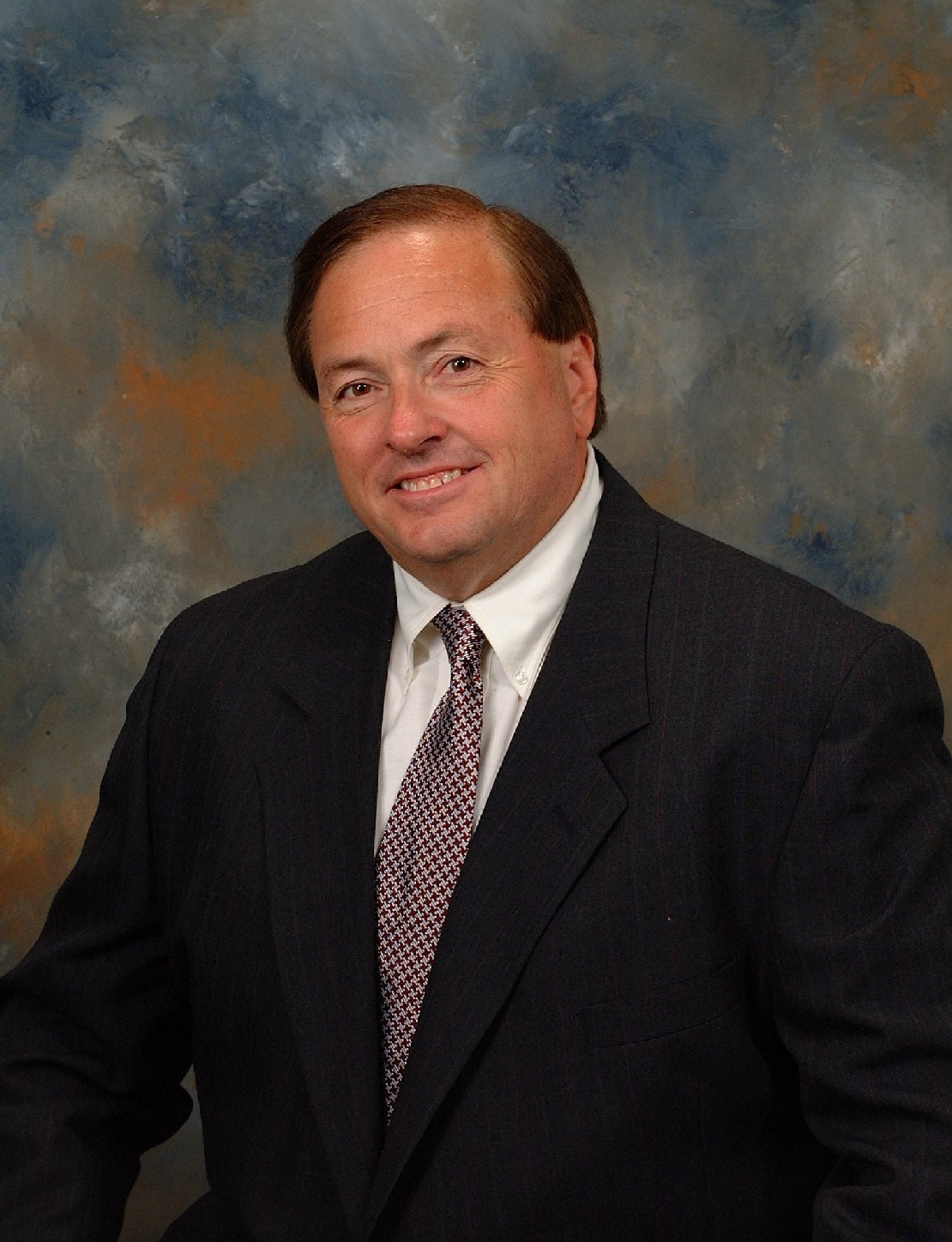
Marcel W. Wagner, Jr, CEcD

The Board of Directors of the Great River Economic Development Foundation, announced the hiring of Marcel W. Wagner, Jr. as the new President of the organization. An eleven-member committee consisting of community leaders and GREDF board members recommended Wagner after a 6-month-long nationwide search. Wagner was unanimously approved by GREDF Board of Directors members attending a special meeting on March 5, 2013.

“Marcel’s years of experience as an economic development professional and proven track record in a region with similar characteristics to our tri-state region made him stand out among the pool of strong local and national candidates we interviewed,” said Tim Finlay, Chairman of the GREDF Board of Directors and a member of the Search Committee. “The level of interest in the position indicated to us that GREDF and our region have a reputation for being pro-economic growth,” Finlay added.

“I’m ready to hit the ground running. The presence of such a qualified staff and committed GREDF Board were very important to me as I went through the selection process” said Marcel Wagner. “My wife and I are eager to make the tri-state region our home and have already experienced what a special and welcoming community Quincy is,” Wagner added.

Mr. Wagner’s first official day with GREDF was Monday. “Thanks to the diligent work of the members of the Search Committee, we were able to meet the timeline we originally established for a spring hiring,” said Finlay.

Jim Mentesti announced his retirement after 27 years of service to GREDF and the Tri-State area in August. Phil Conover had been serving as interim President while Jim Mentesti served as a consultant during the transitional period. Conover will continue serving the organization through the end of March. Mentesti concluded his service as a consultant at the end of February.

Who is Marcel Wagner?

Marcel Wagner has spent the past 21 years with the Allen Economic Development Group in Lima, Ohio, the last 19 of those years as its President and CEO before retiring from that position in January. Wagner is a Certified Economic Developer and former Chair of the International Economic Development Council Certification and Education Committee. He was an Executive Committee Member of Team Ohio through the Ohio Economic Development Council as well as former chair of the Allen County Workforce Investment Act Board and Allen County Revolving Loan Fund.

During his tenure with the AEDG, Wagner developed and implemented a regional marketing plan and targeted industries marketing program, established a Foreign Trade Zone, oversaw the development and sale of 5 spec buildings, participated in the start up of two entrepreneurship centers and administrated a private loan fund, among other activities. He was also involved as a pilot user in the development of business retention software now widely used in the economic development world. During his time at AEDG, the organization assisted in over 105 industrial and commercial projects creating 6,300 jobs, retaining 3,500 at-risk jobs and representing $3.2 billion in new capital investment. One example of Wagner’s contributions is his involvement in the development and construction of the 1.2 million square foot Proctor and Gamble Distribution Center, one of the largest fully automated logistics center in the world.

AAIM EMPLOYERS’ ASSOCIATION Supervisor Training

AAIM EMPLOYERS’ ASSOCIATION Supervisor Training November 21, 2012

[share]

Introducing “90 Days to Success”

Would you like to know how your supervisors can make you more successful? Here’s a few interesting
facts…
  • A well trained supervisor can save money on hiring! The average cost of replacing a first line employee that makes $8 per hour is $3,500 (SHRM research).
  • A well trained supervisor can improve productivity! According to a Gallup survey in 2004, poorly managed workgroups are an average of 50% less productive and 44% less profitable.
  • A well trained supervisor can help create a great place to work! According to a Monster.com survey, bad managers are the #1 reason people lose their temper at work – a 39% rate.
  • A well trained supervisor can protect your company! The average jury verdict in a wrongful termination case is $640,000 and companies lose 64% of the cases. National Institute for Advanced Conflict Resolution.
  • A well trained supervisor can help retain talented employees! Inc. Magazine estimates that 70% of turnover is due to poor management.
AAIM Employers’ Association would like to introduce you to 90 Days to Success, a proven supervisory training program that will provide your supervisors with the skills they need to help your company be successful. AAIM EA is bringing 90 Days to Success training program to the Quincy area beginning in January at a special introductory rate.
More details are available here.

The Details

Location: JK Creative Printers, 2029 Hollister-Whitney Parkway, Quincy
Duration: Six full days, 8:00 a.m. – 4:30 p.m.
Dates: 2013 – Tuesday’s 1/15; 1/29; 2/12; 2/26, 3/12 and 3/26 or Wednesday’s 1/16; 1/30; 2/13; 2/27; 3/13 and 3/27
Member Cost: $1,500/person
Non-member Cost: $1,800/person
Registration Deadline: January 11 ,2013

For questions or to register contact: Teresa Bowen, teresa.bowen@aaimea.org, 800-948-5700

REGION CHARTERS COURSE TO TRAIN STUDENTS FOR ADVANCED MANUFACTURING CAREERS

REGION CHARTERS COURSE TO TRAIN STUDENTS FOR ADVANCED MANUFACTURING CAREERS November 1, 2012

[share]

Pathways to Results Process Connects Education and Business Resources; $500,000 Grant Boosts Effort

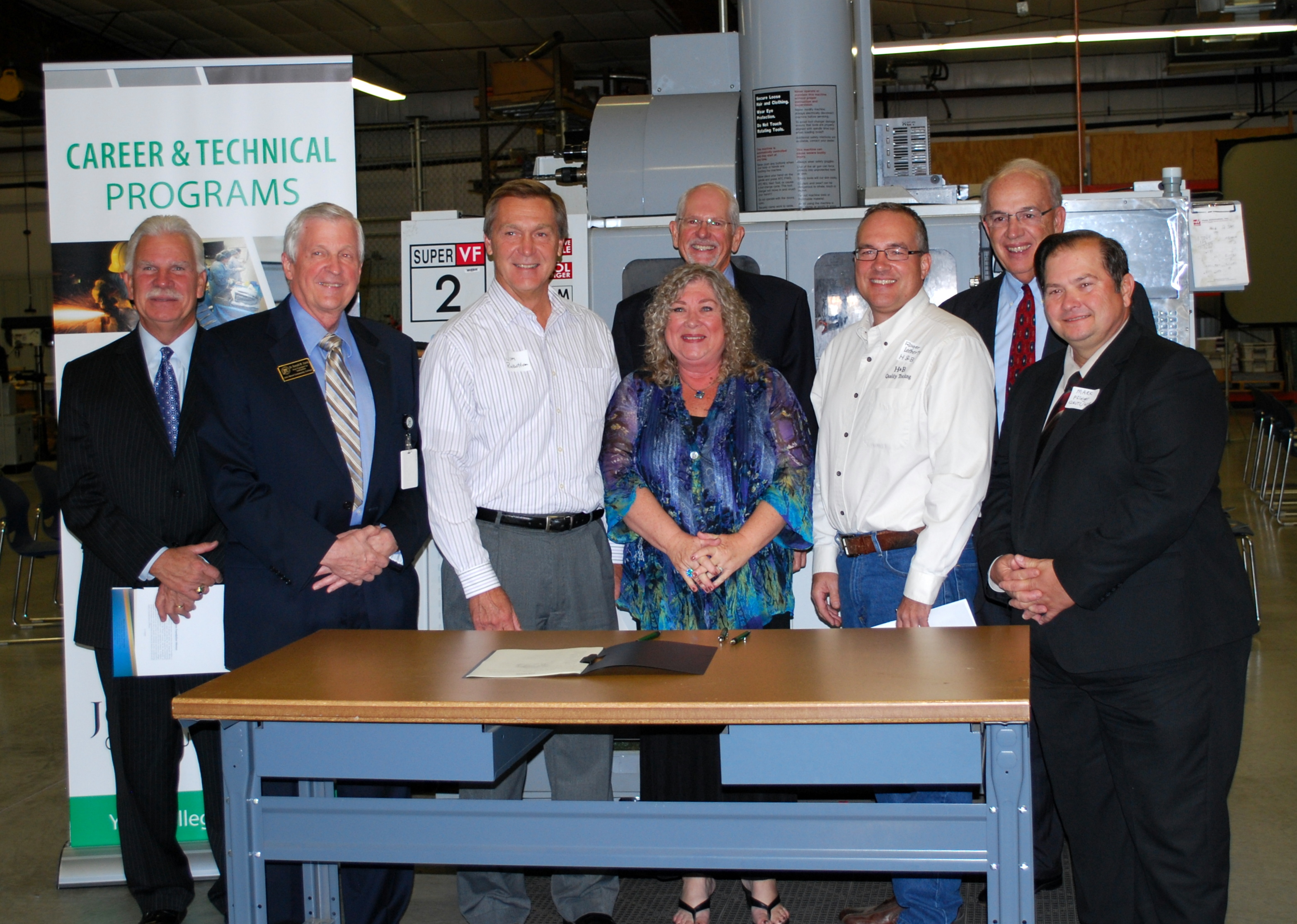
The new world of advanced manufacturing requires a drastically different set of skills from its workforce. On October 25, 2012, private business, education and economic development leaders signed a charter to formalize the “Pathways to Results” process.  The process aligns K-12 coursework with college degrees and business resources to give students the new skills needed to ensure family-sustaining careers in our region’s manufacturing sector.

The signing is the latest step in a concentrated effort to change the perception of manufacturing and build the workforce of tomorrow. The charter collectively commits business and K-college entities to clearly define a path for manufacturing careers while boosting resources, equipment and expertise available for students to attain careers in the high-tech industry.

Defining the Path

High school students have clearly defined pathways leading to four-year college degrees. Therefore, parents and the community have an expectation that their high school students will pursue a four-year degree even though many college students have no real idea what career they might pursue upon graduation.

Manufacturing jobs do not currently have a defined educational pathway, which is an even bigger obstacle for parents and counselors trying to guide students into these high demand jobs.

Pathways to Results seek to insert a systematic process for communication with high schools including pathways, preparation, transition and curriculum alignment to make things clearer for students and their advocates.

“It is hard enough for students to know which career path to choose,” Pam Foust, dean of career and technical education at JWCC said. “When they determine a focus, possibly in high school, they might find that they haven’t taken the courses to enter college ready to master evolving skills employers want. What Pathways to Results does is to clearly define the math, science and critical thinking skills that need to be in courses from kindergarten through high school.  With these basic skills, any evolving manufacturing technology can be learned from college instructors who will have access to the latest equipment and processes.”

Funding the Process

JWCC received a $10,000 grant from Office of Community College Research and Leadership as part of the state’s effort to improve career pathways.  The College and its partners intentionally linked Pathways to Results funding with a federal grant in an effort to grow a skilled workforce to fulfill current and future manufacturing industry needs.

Phil Conover, interim president of the Great River Economic Development Foundation, announced that as a result of collaborative partnerships, John Wood Community College received a $525,769 grant from the Trade Adjustment Assistance – Illinois Network for Advanced Manufacturing Grant (TAA-INAM).  JWCC is one of 20 Illinois community colleges that received funding from the Department of Labor.

“Because of the partnerships built over the last several years, this funding uniquely positions the region to prepare future technicians, engineers and managers as our manufacturing industry expands,” Conover said.  “This process, when integrated, is a tremendous platform to attract new manufacturers to the region because we will have the skilled workforce they require to be successful.”

The half million dollar grant will be received over a three-year period to expand and improve the delivery of career manufacturing training programs.  The training will lead to industry-recognized certificates or associate degrees that can be completed in two-years or less to meet regional employer needs.

Funding will provide for equipment, course development, advising, instructional support, software, program coordination, internship mentoring, tutoring and supplies.  The grant will also fund the hiring of personnel to help students transition from high school to college and college to careers.

In addition to state and federal funding, Lauren Kiest, an owner in aNH3, a company that supplies  products for the agricultural industry, recently created a private manufacturing scholarship with the JWCC Foundation to help students access funds to receive the new skills training needed for today’s industry.

Current Climate

Manufacturing accounts for 17 percent of this region’s economy, yet few students are transitioning from high school to John Wood Community College’s manufacturing program.  JWCC is the only area institution to offer specific degrees and certificates leading to careers the industry demands.  Currently four JWCC students have declared advanced manufacturing as their major.  Twenty-six JWCC students are pursuing welding certificates or degrees; 12 are pursuing a degree in computer-aided design (CAD); and 39 students have declared their intent to earn a degree or certificate in electrical technology.

At the high school level, Quincy Area Vocational Center (QAVTC) has a total of 35 students in day technical programs including CAD/drafting, electronics, precision metals and welding.  Twenty students from rural schools are enrolled in QAVTC’s evening programs. An additional 80 students are enrolled in Project Lead the Way at QAVTC.

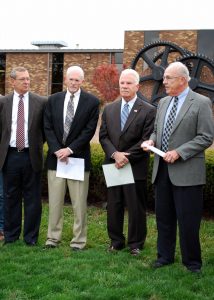
Adams County Board Chairman Mike McLaughlin, JWCC President Dr. John Letts, Quincy Mayor John Spring and Interim GREDF President Phil Conover at October 5, 2012, National Manufacturing Day Press Conference

Workforce shortages are growing in areas such as industrial maintenance, (programming and maintaining technologically advanced equipment), precision machining, welders and automation systems. The current high school and college students studying for these careers will not come close to filling current and future positions available with the area’s 100 manufacturing firms.

“Manufacturing is a whole new world,” Roger Leenerts, business owner and Pathways to Results charter member said.  “For many years it has not been suggested as an ideal career path, that it is low paying, dirty and unstable.  The reality is that it requires a highly skilled workforce to maintain high tech machinery.  We want high school students to see manufacturing as a career, not just a job.”

Not Your Dad’s Plant – Perception Change Manufacturing has been the economic engine of the region for decades, but gone are the days of man-made assembly lines with workers assembling various product parts.  The industry is rapidly evolving, with clean work environments and head-of-household wages waiting for employees with the right skills.

Students with manufacturing degrees can earn upwards of $60,000 because they possess the knowledge and skills to manage all or portions of automated processes from design, logistics and production.  Candidates with specialized knowledge of electrical and computerized components of automated machines can earn between $35,000 and $50,000.  Welders are in high demand and can earn $20 an hour with basic knowledge and much more with additional training. Most manufacturing jobs include solid benefits.

More information is available by contacting Foust at 217.641.4956 or pfoust@jwcc.edu.

Great River Economic Development Foundation
John Wood Community College
Workforce Investment Board of Western Illinois

2012 Tri-State Housing Summit

2012 Tri-State Housing Summit May 16, 2012

2011 Tri-State Development LogoYOU ARE INVITED!
2012 Tri-State Housing Summit – June 7

The Tri-State Development Housing Task Force invites you to join elected officials and business/industry leaders for a day of dialogue about housing issues our region faces including resources, shortfalls and opportunities.

Adequate housing – like highways, healthcare and retail establishments – is necessary to achieve desired growth and quality of life in a region. For that reason, the Tri-State Development Summit established the Housing Task Force in 2005.

Our tri-state region is not immune to housing issues that communities around the country face – availability, affordability and quality. That’s why the Housing Task Force’s mission is to provide affordable workforce housing in the tri-state area. This includes:

  • Increasing affordable housing options for the region’s workforce
  • Providing counseling to first-time home buyers
  • Identifying funding sources for housing development throughout the region

The creation of affordable housing can increase community pride, help attract industry and increases property values and the community tax base. Please join us Thursday, June 7, 2012 on the Campus of Culver Stockton College. Agenda and registration details are below.

Summit Agenda

8:00-8:45 REGISTRATION
8:45-9:00 WELCOME
  • Don Patrick, President/CEO, NECAC
  • Dick Valentine, President, Culver Stockton College
  • Jarred Phillips, Mayor, City of Canton
9:00-9:30 TRAINING FOR WORKFORCE HOUSING
  • Howard Kirchner, Workforce Development Director, Two Rivers Regional Council of Governments
  • John Spring, Mayor, City of Quincy
  • Stefan Crider, President, Crider Construction
9:30-10:30 LEGISLATIVE VIEWS
  • Senator Brian Munzlinger (Invited)
  • Rep. Craig Redmon (Invited)
  • Rep. Paul Quinn
  • Rep. Tom Shively
  • Rep. Lindell Shumake
10:30-10:45 BREAK
10:45-11:15 HOUSING AND NEIGHBORHOOD DEVELOPMENT
  • Nadia Anderson, Iowa State University
11:15-11:45 WORKFORCE HOUSING OPPORTUNITIES
  • Stacey Epperson, President, Next Steps
11:45-1:00 LUNCH
  • Missouri Lt. Governor Peter Kinder (Invited)
1:00-1:30 FUNDING OPPORTUNITIES FOR AFFORDABLE HOUSING
  • Janine Stephenson, Area Specialist, USDA Rural Development
  • Lindsay Cheek, Area Technician, USDA Rural Development
1:30-2:15 HOUSING DEMAND AND AFFORDABILITY: TRENDS IN THE TRI-STATES
  • Bobette Cawthorn, President, Quincy Realtors Association
  • Gary Broughton, Century 21 Broughton Team
2:15-2:45 CLOSING REMARKS
  • Chuck Scholz, Member, Tri-State Development Summit Steering Committee

Details & Registration:

DATE: Thursday, June 7, 2012

LOCATION: Culver Stockton College, Canton, MO

TIME: 8:00 am Registration, 8:45 am – 2:45 pm Program

COST: Free (lunch is furnished)

DEADLINE: Friday, May 25, 2012

To Register / For More Information:

Email or call Carla Potts (cpotts@necac.org or 573-324-6622) with the following information (You will receive more details including location and parking instructions upon registration):

  • Name
  • Organization
  • Address
  • Phone
  • Email Address
  • # Attending
  • Earlier
  • Later
GREDF

Links

  • About
  • Newcomer Concierge
  • Why Here
  • Site Selectors
  • Workforce Solutions

GREDF

501 Hampshire St
Quincy, IL 62301
Phone: (217) 223-4313
IL
facebook
twitter
linkedin
roq
© 2026 Great River Economic Development Foundation. All Rights Reserved.